
How Does Bacteriostatic Water Work?
Bacteriostatic water works by mixing a water-based solution with a preservative that stops the growth of germs. In Bacteriostatic Water for Injection products, that preservative is benzyl alcohol.
The main idea is that it means the ability to stop the growth of living microorganisms. It does not mean the solution kills every germ that might get into it.

Introduction
This difference is important because bacteriostatic water is made for uses where a drug needs to be mixed or dissolved and the product label allows the use of a carrier. The label for Bacteriostatic Water, for Injection says the product contains benzyl alcohol and is stored in a container for multiple uses.
What Does "Bacteriostatic" Mean?
“Bacteriostatic” means bacteria stop growing, not that they must be killed.
That point matters in the discussion about how these agents work. A bacteriostatic substance changes the setting so germs do not multiply as fast. What happens next can shift with the germ type, the dose, how long it is present, and the way it is made.
So in medicine, the term is best read as control of growth. It is not a claim that the drug can wipe out contamination if it was handled poorly.
This type of effect is also important for medicines that are stored in containers for repeated use. A preservative may help protect the product inside the vial. Still, this help works together with other steps used to keep the product safe and stable.
How Benzyl Alcohol Can Inhibit Microbial Growth
Microbes need working cells to live and to make new cells. Antimicrobial ingredients can affect those needs in different ways.
Benzyl alcohol has been studied for its effects on microbial cell structures. Studies report that it can change features of bacterial membranes. When these parts shift, the cell can lose normal function. In the appropriate lab setup, that can lower how well the microbes survive.
One simple way to picture the chain is like this:
- Benzyl alcohol in the mixture
- It contacts cell structures
- Normal cell processes are disturbed
- Some microbes cannot stay alive or keep multiplying
What happens in practice will vary by the microbe and by the surroundings. Because of that, the steps above are meant as an overview. They are not a full account of the molecular events.
Does Benzyl Alcohol Kill Bacteria?
People often see the term bacteriostatic and assume it means instant death for all bacteria in a vial. That is not what the term refers to. In practice, benzyl alcohol is used for its preservative effect.
This is why “preservative” and “sterilization” are not the same thing.
Sterilization is a tested method meant to reach a specific, high level of microbial inactivation. Preservative use is different. It is added to products to control microbial growth during the intended use.
So it is not appropriate to call bacteriostatic water a product that “sterilizes” a dirty vial or a contaminated medication.
In the process, the main pharmaceutical batch is made sterile first. Then the antimicrobial ingredient is selected and included as part of the formula. It supports control of microbes during normal use. These steps are separate, so they should not be treated as one idea.
How the Preservative Connects to Multi-Use Vials
Bacteriostatic Water for Injection is sold in multi-dose containers. These are meant for repeated punctures, as long as the user follows the label. The product information states that this is a multiple-dose item.
Using the same container over time is not the same as using a container one time. Each new entry changes the handling risk. A preservative can slow or limit microbial growth in the liquid. That is one reason multi-dose formulas are designed differently from preservative-free products.
Even so, having a preservative does not mean the process is risk-free.
The preservative is only one piece of the full formulation. Safe use still depends on appropriate handling, tools, careful aseptic technique, and instructions on the product label.
Bacteriostatic Effect Is Different From Sterility
Some people assume that a bacteriostatic solution is a sterile product that keeps killing germs after it is opened.
This is not a good way to think about it.
Sterility and bacteriostatic activity point to different things.
Sterility is about the product’s microbial status after a validated manufacturing and sterilization step. Bacteriostatic activity is about how the formulation inhibits microbial growth due to its antimicrobial ingredient.
Bacteriostatic Water for Injection is itself supplied as a sterile preparation. Current product labeling describes the product as sterile and identifies benzyl alcohol as the bacteriostatic preservative.
Keeping these concepts separate makes the mechanism much easier to understand:
- Sterile preparation: manufactured to meet applicable sterility requirements.
- Antimicrobial preservative: helps inhibit microbial growth.
- Aseptic handling: reduces the opportunity for contamination.
- Bacteriostatic property: describes inhibiting microbial growth rather than guaranteed microbial destruction.
These functions complement one another but should not be treated as interchangeable.
Why the Mechanism Matters in Pharmaceutical Preparations
Understanding the method helps because the preservative is doing a job in the medicine. It is not just an extra item in the mix.
The antimicrobial effect alone does not settle the issue. It cannot decide if one product fits every medication.
For instance, the current Bacteriostatic Water for Injection label says it should be used to dilute or dissolve drugs and follow the manufacturer’s directions.
The method explains one part. It tells how the antimicrobial action works. It does not address the other part. It does not tell you whether a specific drug should be mixed with that carrier.
Does the Water Itself Provide the Bacteriostatic Effect?
No.
The name ” water” might suggest that the water itself stops bacteria from growing. This is not true. The ability to slow down growth comes from the preservative added to the water, not from the water alone.
In products labeled as Bacteriostatic Water for Injection, benzyl alcohol is the ingredient responsible for this effect. It acts as an agent.
The water itself serves as a carrier or vehicle for the medication. It does not have antibacterial powers.
This difference matters when looking at types of sterile water used in medicine. A sterile water product without any preservatives should not be assumed to prevent growth in the same way as bacteriostatic water does.
What happens when microbial growth is stopped?
Microorganisms need to carry out functions to obtain energy, reproduce, and maintain their cells. If these processes are disrupted, the microbes can’t multiply properly.
An antimicrobial preservative interferes with those activities. As a result, bacteria may struggle to grow.
The goal here is controlled growth. Not to create an environment that makes mistakes go away. With a preservative, good handling practices remain vital.
A useful way to visualize the principle is:
Contamination risk → targets harmful microbes → reduces their ability to spread → gives extra protection against contamination
The word “extra” is important. The preservative isn’t the line of defense. It’s one part of a system meant to keep the product safe. Not the only thing protecting it from germs.
Can Bacteriostatic Water Prevent All Microbial Contamination?
No: Bacteriostatic Water should not be described as contamination‑proof.
Bacteriostatic Water is not a shield that stops all germs.
An antimicrobial preservative can help control growth. It does not remove the requirement for proper pharmaceutical manufacturing and handling practices. Product labeling still places conditions on how Bacteriostatic Water for Injection should be used.
This point is especially important because microbial behavior varies. Different microorganisms can have varying levels of susceptibility to agents, and preservative effectiveness depends on the formulation and intended conditions.
For this reason, statements such as “benzyl alcohol kills all bacteria” or “Bacteriostatic Water cannot become contaminated” are too broad. Should be avoided.
An accurate statement is:
“The antimicrobial preservative helps inhibit growth under the conditions for which the pharmaceutical product has been formulated and evaluated.”
Factors That Influence Bacteriostatic Activity
The effectiveness of preservation is not determined by the name of the product alone. Several factors can influence growth control, including:
Preservative concentration
The concentration of benzyl alcohol is a formulation‑specific characteristic. Current marketed presentations show that concentrations are not necessarily identical across all products.
Types of microorganisms
Different microorganisms can respond differently to substances. Results observed with one organism should not automatically be applied to every species or other microorganism.
Formulation environment
The chemical and physical characteristics of a formulation can influence activity. Factors such as the surrounding formulation environment and interactions between ingredients can affect performance.
Exposure conditions
Antimicrobial effects depend partly on the conditions under which microorganisms encounter the preservative. Laboratory observations should not automatically be interpreted as identical to behavior in every preparation.
Product design
The container, formulation, manufacturing process and intended use are all part of the product’s design. The preservative should therefore be considered within that system rather than in isolation.
Why Preservatives Do Not Replace Aseptic Handling
It can be tempting to think that if a product contains a preservative, contamination is no longer a big problem.
That conclusion would be wrong.A preservative is meant to offer protection inside the product. It is not a replacement for methods that stop contamination from happening in the first place.
The difference is simple: Contamination prevention aims to keep microorganisms from getting into the product.
Antimicrobial preservation helps control the growth of microorganisms if they are already in the product under certain conditions.
Both ideas are important. They have different jobs.
This is also why pharmaceutical companies use controlled processes, validated procedures, packaging, and microbiological quality checks instead of relying only on preservatives.
Does Every Bacteriostatic Water Product Work the Same Way?
The basic idea is the same. You should not assume all products are exactly the same.
Different makers or versions may vary in concentration, packaging, label, and other details. For example, labels include Bacteriostatic Water for Injection with either 0.9% or 1.1% benzyl alcohol.
Therefore, you must read the product’s label to know its formulation and its approved use.
This is especially crucial when a manufacturer says which diluent to use or sets limits on preservatives.
Important limits of bacteriostatic action
Bacteriostatic action has key limits:
- It does not guarantee sterilization of a dirty or contaminated item.
- It also does not excuse poor handling practices.
- Different microorganisms do not respond the same way.
- The product is not the right choice for all medication uses.
- You still must follow the product label.
- It does not mean the preservative is safe or suitable for every patient group.
One labeling example notes a warning for neonates. This caution is linked to benzyl alcohol and its toxicity.
These points support one idea. The bacteriostatic mechanism describes the antimicrobial effect. It does not determine the full clinical or pharmaceutical stability of the product.
How bacteriostatic water works
You can view the mechanism as a few basic steps.
- The preparation includes a water-based carrier.
- Benzyl alcohol is used as an antimicrobial preservative.
- The preservative can disrupt cell structures and cell functions.
- This slows or stops microbial growth.
The result is growth control, not a substitute for sterile manufacturing.
You still need correct handling. Also, bacteriostatic water is not effective just because it is water.
A key caution
Do not treat bacteriostatic action like sterilization. It does not prevent all contamination alone. It also does not remove the need for proper handling. And it does not automatically fit every medication or every patient.
So how should you think about it? You can understand the product best by looking at three parts. Sterility is one part. Preservation is another part. Safe contamination control is the third. When those parts are kept apart, the role of bacteriostatic water is easier to grasp.
What People Ask?
1. What does bacteriostatic water do?
This type of water contains an additive that inhibits bacterial growth. Some brands use benzyl alcohol. That compound affects cell systems, so microbes struggle to grow and spread.
2. Does bacteriostatic water kill bacteria?
Usually no. “Bacteriostatic” means it mainly slows or holds back growth. It is not the same as destroying every organism. It also does not mean a vial is clean in every case.
3. Does the preservative fully prevent contamination?
No. A preservative may slow microbes from multiplying. Even so, it does not erase the chance of contamination. Safe handling and clean technique still matter a lot.
4. Is bacteriostatic water an antibiotic?
No. It is a pharmaceutical water product with an antimicrobial preservative. It is not an antibiotic medicine, and it should not be described as a drug that attacks bacteria.
5. Why does “bacteriostatic” matter?
This word helps distinguish two ideas: stopping growth versus sterilizing. It refers to a product that slows microbial multiplication. It does not mean every microbe is wiped out.
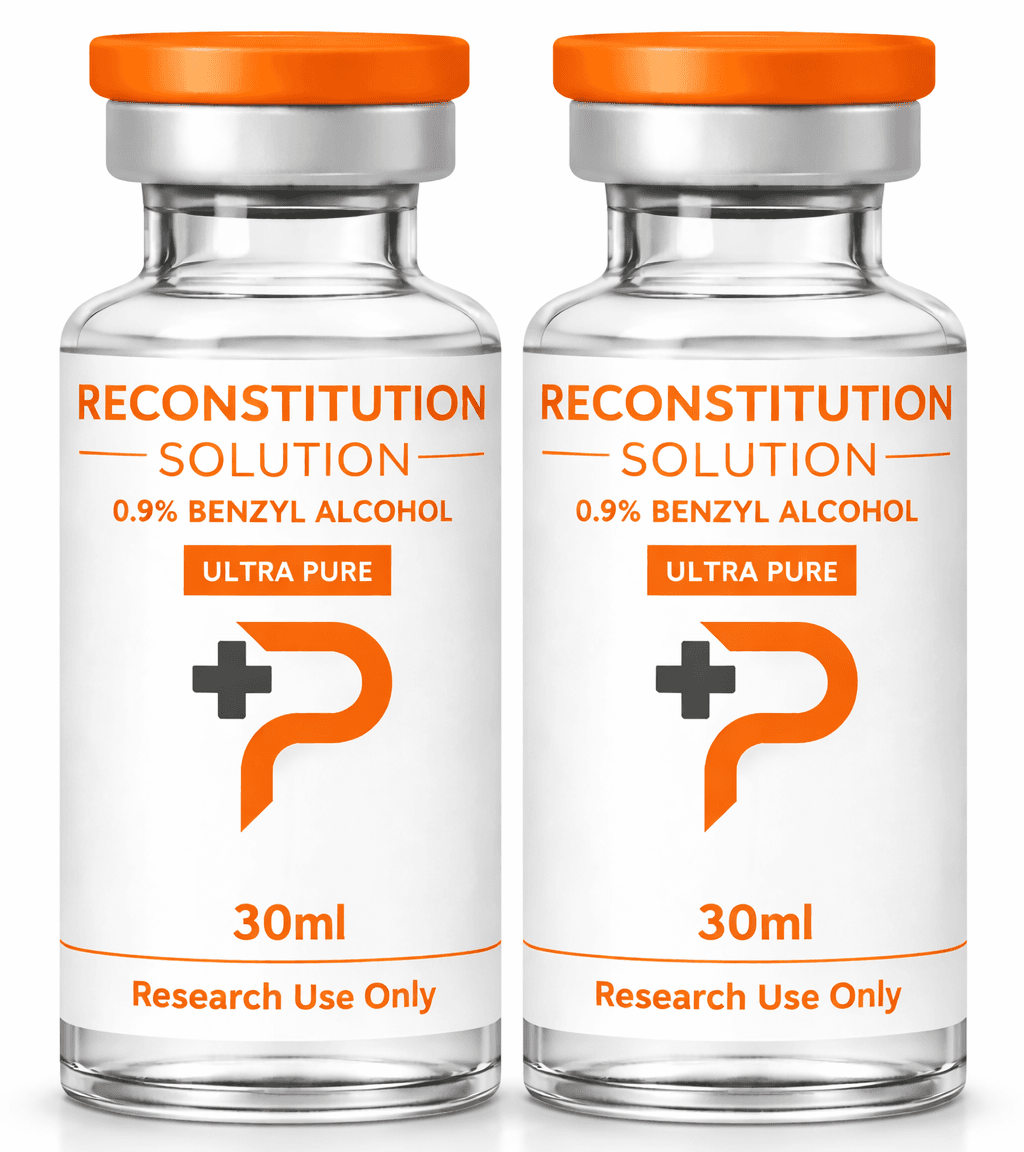
Reconstitution Solution 30 mL – Pack of 2
Manufactured with High-purity formulation. Batch quality controlled for consistent formulation quality. Laboratory Research Use Only.
View Product →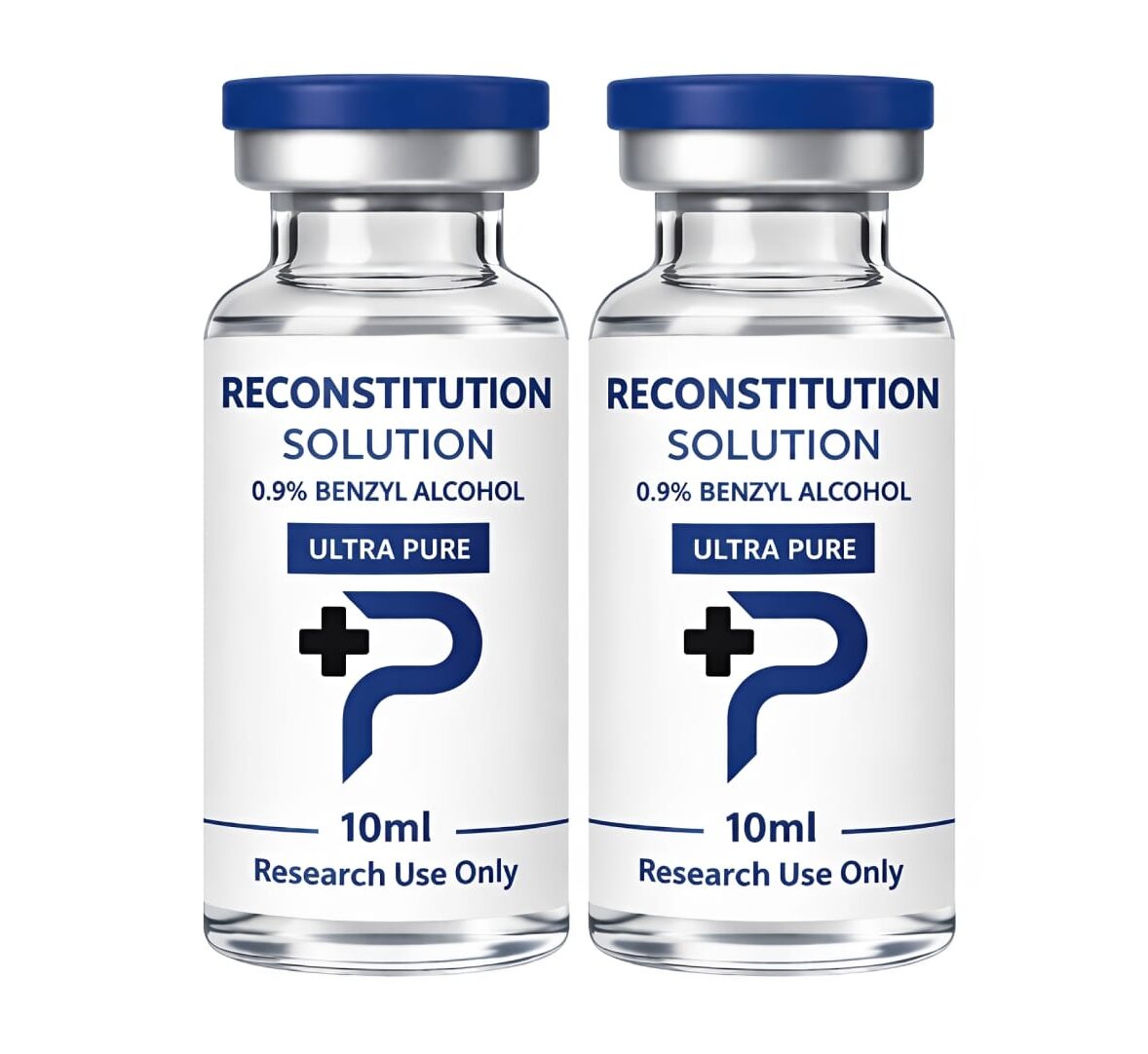
Reconstitution Solution 10 mL – Pack of 2
High-purity formulation manufactured using best-quality ingredients, sized for smaller-volume laboratory research applications. Laboratory Research Use Only.
View Product →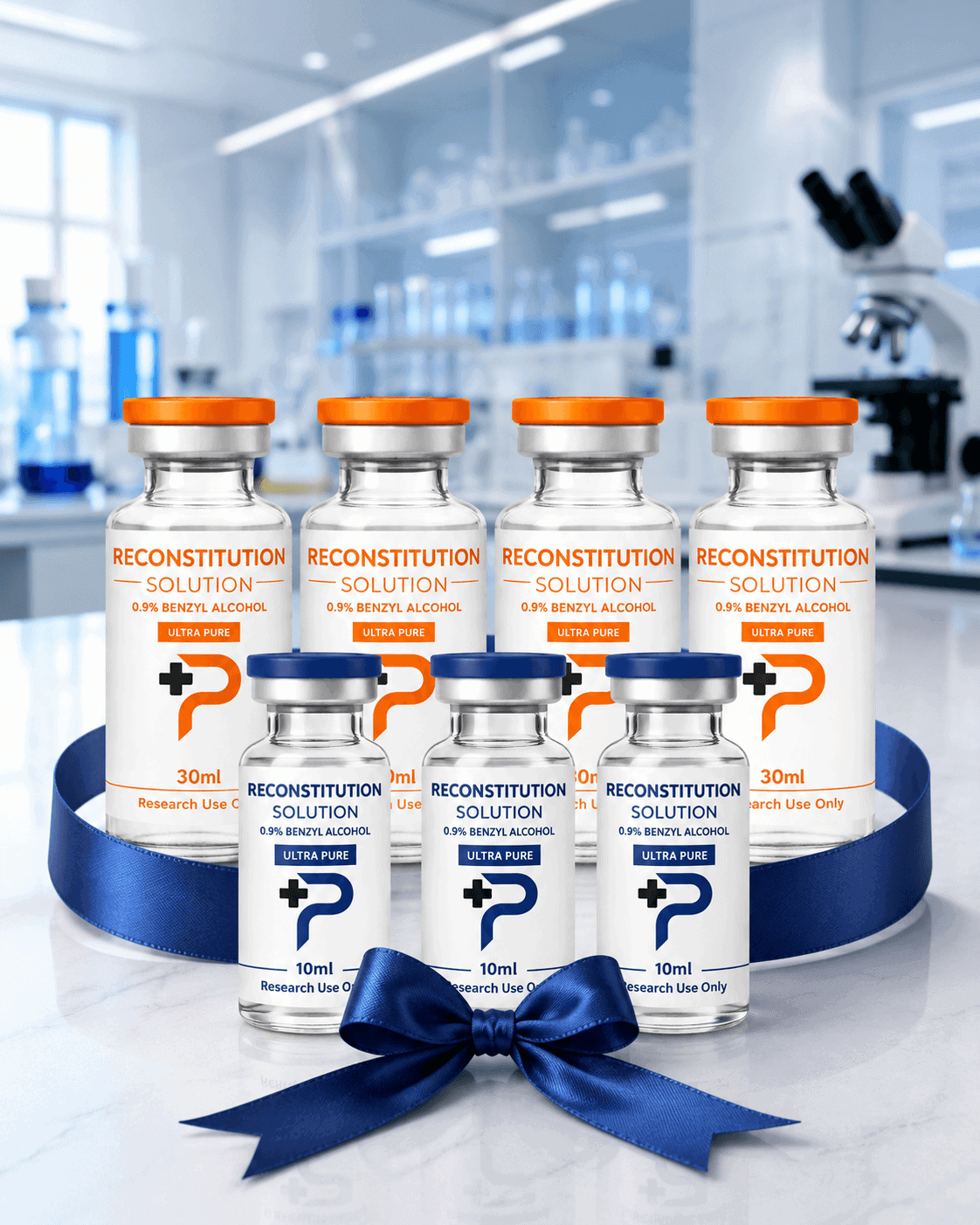
Bundle Deals
Curated bundles built from our Highly-Purified formulations, batch quality controlled for consistent formulation quality across every unit. Laboratory Research Use Only.
Explore Bundles →