
What Is Reconstitution Solution Used For?
A reconstitution solution is used for dry medicines or lab materials. It provides the liquid used to reconstitute a powder, freeze-dried material, or dry mixture when the instructions say to reconstitute it.
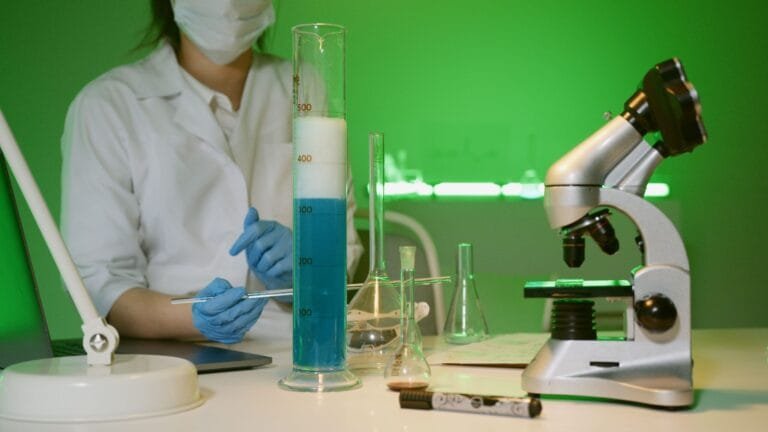
Introduction
The job of reconstituting can be different depending on where it’s done. In medicine, reconstitution may be part of preparing medicine for use according to the rules. In labs and research, a chemical or a research item might be reconstituted so it can be used in a specific test or experiment.
The main thing is that reconstituting is a step that depends on the task. The type of liquid, how much is used, and how it is prepared. What is made depends on the material and the instructions that come with it.
What Is Reconstitution Solution Used For in Practice?
Reconstitution solutions are used when a material comes in a form but needs to be made into a liquid or a mixture for the job it is meant to do.
Common places where this happens are:
- Pharmaceutical preparation
- Clinical laboratory work
- Research laboratories
- procedures
- Making certain diagnostic material
- Running controlled experiments
The liquid is added as part of a step-by-step process that helps the material reach the next step.
The exact use depends on the formulation and the directions that come with it.
Reconstitution Solution Uses in Pharmaceutical Preparation
A key place where reconstitution solutions are used in preparation.
Some medicines are sold as dry powders. Before these medicines can be used, the manufacturer may specify that a particular liquid is required and how to mix the powder with the liquid. In this setting, reconstitution helps to create the medicine that the product label describes.
The instructions may identify:
- The required reconstitution liquid
- The volume to be added
- The preparation method
- The resulting concentration
- Storage conditions after preparation
- The period for which the prepared product remains suitable under specified conditions
These details are part of the pharmaceutical product’s requirements.
Reconstitution should therefore be seen as a controlled step within the medication-use process rather than an independent treatment decision.
Why Are Some Pharmaceutical Products Reconstituted?
A major reason for supplying products in dry form is formulation stability.
Some pharmaceutical substances may be less stable when kept in water for periods. A manufacturer may therefore make the product as a preparation and set conditions under which it can remain stable before it is mixed with liquid.
When the product is needed, the label tells the user what is added to the liquid.
This approach separates two stages of the product lifecycle:
storage → reconstitution → prepared formulation
The storage characteristics of the dry and prepared product may be different. Reconstitution therefore marks a transition in the preparation process.
Reconstitution Applications in Clinical Settings
In healthcare environments, reconstitution may be part of preparing pharmaceutical products before they are given to patients.
For example, some medications are supplied as powders or lyophilized preparations because of their formulation characteristics. The healthcare professional who prepares the product follows the labeling and institutional procedures to decide how it should be mixed.
The purpose of the reconstitution step may include reaching the concentration and physical form that the manufacturer set.
This process can involve controlled considerations:
- Identifying the correct product.
- Checking the specified diluent.
- Measuring the required volume.
- Following the preparation procedure.
- Inspecting the resulting preparation as required.
- Observing the storage and use conditions.
The exact procedure varies by product. Reconstitution should therefore be performed by trained personnel according to the applicable instructions.
What is Laboratory Reconstitution and Why Is It Used?
Laboratory reconstitution is a process that takes a laboratory material and puts it into a prepared state so that it can be used for a specific procedure.
Laboratories can get materials in forms like:
- Dry reagents
- Lyophilized reference materials
- Powdered preparations
- Dried biological materials
- Research compounds
- Analytical materials
By adding the appropriate liquid, the material can be ready to use in a test or in research.
For example, a lab procedure may require a reagent to be dissolved in liquid before an analysis can take place. The liquid used for reconstitution is part of the setup conditions for that procedure.
The important thing is that laboratory reconstitution is guided by the instructions in the protocol and the needs of the material, not by a general laboratory liquid.
Reconstitution in Research Work
Research labs often use reconstitution when a material arrives in a state for experiments.
A scientist might need to prepare a material before checking how it acts, running an assay, or putting it into a controlled experiment.
The goal of reconstitution can be to:
- Make a stock solution
- Create an experimental setup
- Get a material ready for a test
- Bring a dried research reagent back to its normal working form
- Get reference materials ready for a certain test
The reconstitution method needs to be set by the material’s instructions or a verified lab procedure.
So research reconstitution can involve different kinds of materials, but the main idea is the same: a dry material is turned into the proper form using liquid.
Reconstitution in Analytical Work
Another area where reconstitution is used is in testing.
Some reference materials, reagents, and lab preparations come in a solid form. Before an analysis can be done, the material may need to be reconstituted as described in the method or instructions.
The following points can be very important:
- How much liquid is used
- How the mixture is made
- The temperature
- How long it takes
- What type of liquid is used
- The final strength
- How stable the mixture is
Labs may therefore list reconstitution conditions as part of an official method.
In this situation, reconstitution is not a simple step. It can be part of preparation.
Reconstitution and Diagnostic Materials
Certain diagnostic products and laboratory materials also involve a reconstitution step.
A diagnostic reagent may be supplied in a state and require a specified liquid before it can be incorporated into the testing procedure.
The instructions can define how the material should be prepared and how long the prepared reagent can be used under stated conditions.
Because diagnostic systems can depend on reagent characteristics, a specified reconstitution method is an important part of the test procedure.
The appropriate preparation method should therefore come from the diagnostic product documentation or laboratory procedure.
What Happens to the Material During Reconstitution?
The physical result of reconstitution depends on the material.
A dry formulation may be designed to produce a solution in which the relevant components dissolve. Another formulation may be intended to produce a suspension, where particles remain distributed throughout the liquid rather than dissolving.
This difference matters because not every reconstituted preparation should look identical.
The expected appearance, mixing requirements, and handling conditions can be defined by the product or laboratory documentation.
A preparation that differs unexpectedly from its documented characteristics may require evaluation rather than being assumed to be acceptable.
For a broader explanation of how bacteriostatic water is formulated, see What Is in Bacteriostatic Water? Ingredients Explained.
Does Reconstitution Always Produce a Clear Liquid?
No. Reconstitution does not necessarily result in a clear solution.
The final physical appearance depends on the formulation.
Possible outcomes can include:
- A solution
- A slightly colored solution
- A suspension
- Another defined physical preparation
The expected appearance should be determined from the relevant product information or laboratory protocol.
This is important because visual appearance alone cannot establish whether a preparation is chemically suitable or properly reconstituted.
How Reconstitution Can Affect Concentration
Reconstitution can establish the concentration of the material.
The dry formulation contains a defined amount of material. When a specified volume of liquid is added, the resulting preparation has a concentration.
For example, a fixed quantity of substance is brought to a final volume; the amount present per unit volume is lower than it would be at a smaller volume.
This is why reconstitution instructions may specify a volume rather than simply saying to “add water.”
In analytical settings, concentration can be important to the intended function of the preparation. The specified volume should therefore be treated as part of the established procedure.
Reconstitution and Subsequent Dilution
Reconstitution can sometimes be followed by another preparation step known as dilution. I find this distinction helpful.
These are concepts.
During reconstitution, a dry material is turned into a liquid or a dispersed form. During dilution, an existing liquid preparation is mixed with liquid to reduce its concentration.
A simplified sequence can look like:
Dry material → reconstitution → liquid → dilution if specified
Not every product needs the second step. Whether further dilution is appropriate depends on the product, procedure, or application.
Keeping these stages separate helps avoid confusion when reading pharmaceutical or laboratory instructions. I also find that it simplifies the process.
If the preparation involves bacteriostatic water, Bacteriostatic Water vs. Preservative-Free Water: Important Differences explains why the choice between these formulations can matter.
What Determines the Appropriate Reconstitution Application?
The intended application determines how threconstitution process should be approached.
For products, relevant considerations can include the dosage form, formulation characteristics, labeling requirements, and intended route of use.
For laboratory materials, the analytical method, protocol, material specifications, and required concentration may be more relevant.
This is why the same word—reconstitution—can describe preparation activities across pharmaceutical, diagnostic, and research environments.
The term identifies the preparation process, while the application determines the requirements.
For more context on how bacteriostatic water is intended to be used, see What Is Bacteriostatic Water Used For? | Common Uses Explained.
Reconstitution Solution Uses in Research vs. Pharmaceutical Settings
Although both fields may use reconstitution, their objectives will be different.
SETTING |
PURPOSE |
|---|---|
Pharmaceutical preparation
|
Prepare a dry medicinal formulation according to its approved instructions
|
Clinical laboratory
|
Prepare a reagent or material for a defined diagnostic or analytical procedure
|
Research laboratory
|
Prepare a dry research material for controlled experimentation
|
Analytical testing
|
Produce a preparation required by a testing method
|
Diagnostic testing
|
Prepare specified reagents for use within a diagnostic system
|
The table illustrates why reconstitution applications should always be considered within their specific context.
A pharmaceutical product and a research reagent may both require a liquid to restore a material, but their quality standards, documentation, intended uses, and preparation procedures will be different.
What Should Be Checked Before Using a Reconstitution Solution?
Before you start a reconstitution procedure, you should review the instructions.
For products, you may need to check the official product labeling. For laboratory materials, the relevant technical documentation, certificate, or laboratory protocol may provide the information.
Important details can include:
- Identity of the material
- Specified liquid
- Required volume
- Preparation instructions
- Mixing or handling requirements
- Expected appearance
- Storage conditions
- Stability or use period after preparation
These details help ensure that the preparation follows the established procedure.
For healthcare products, the preparation should be carried out by qualified personnel. For research and laboratory materials, trained laboratory personnel should follow the protocol.
Common Misunderstandings About Reconstitution Solution Uses
- Reconstitution solution is only used for medicines
- Every dry powder needs a reconstitution solution
- Reconstitution solution and dilution do not mean the same thing
- A reconstituted product is not automatically stable for the same period as the dry material
- Laboratory and pharmaceutical reconstitution do not follow identical rules
Final Takeaway
Reconstitution solutions are used to transform pharmaceutical, laboratory, diagnostic, or research materials into the form needed for a specific application. Their uses can range from making medicines to restoring laboratory reagents for analytical procedures.
The application decides the preparation requirements. Pharmaceutical products are prepared according to their labeling, while laboratory and research materials follow their applicable protocols or technical documentation.
Understanding these reconstitution applications helps separate the general preparation process from the specific purpose for which the resulting material will be used.
What People Ask?
1.What is reconstitution solution used for?
Reconstitution solution is used to turn a dry pharmaceutical, laboratory, diagnostic, or research material into a liquid or dispersed form required for its intended use.
2.What are the main uses of reconstitution solution?
Common uses of reconstitution solution are preparation, laboratory testing, research procedures, analytical work, and the preparation of certain diagnostic materials.
3.What is laboratory reconstitution?
Laboratory reconstitution is the process of mixing a laboratory material with a specified liquid so that the material can be used in an analytical, diagnostic, or research procedure.
4. Is reconstitution used in healthcare?
No. Reconstitution solution is used not only in healthcare but also in laboratories, research settings, analytical testing, and some diagnostic procedures.
5. Is reconstitution the same as dilution?
No. Reconstitution solution generally involves mixing a material with a liquid, while dilution involves lowering the concentration of an existing liquid preparation.
6. Why does reconstitution volume matter?
The amount of liquid in a reconstitution solution can change the concentration and physical traits of the prepared material. Therefore, the specified volume is a part of the preparation procedure.
