
What Is in Bacteriostatic Water?
If you’ve ever looked at the label on a vial of bacteriostatic water, you might have noticed that the ingredient list is surprisingly short. Many people wonder, what is in bacteriostatic water, and why does such a simple formulation play an important role in pharmaceutical preparation? But it’s not really about how many ingredients there are; it’s about what each one does and the role it plays in the formulation.
Introduction
Bacteriostatic water isn’t a medication, and it’s not just ordinary sterile water either. It’s a sterile diluent, made for specific pharmaceutical purposes when the manufacturer’s prescribing information points to it as the right selection. The formulation usually includes Sterile Water for Injection, USP, and 0.9% benzyl alcohol, which function as a bacteriostatic preservative. This preservative helps to slow down, or inhibit, bacterial growth after a multi-dose vial has been opened. So the combination of those two ingredients is meant to fit the intended use of certain products, while also supporting sterility and overall quality up to an acceptable level.
Even though the ingredient list looks straightforward, each component is produced and checked using strict pharmaceutical quality standards. There’s water purification, sterility testing, formulation validation, and then quality control too. Every step is meant to make sure the final result keeps meeting established specifications before it goes to healthcare facilities, pharmacies, research laboratories, and other professional environments.
Quick Answer
The formulation has only two ingredients:
- Sterile Water for Injection, USP
- 0.9% Benzyl Alcohol
Each ingredient has a particular pharmaceutical job. The Sterile Water for Injection, USP is the sterile base, while the 0.9% benzyl alcohol is used as a bacteriostatic preservative; it helps slow down or inhibit bacterial growth once a multi-dose vial has been opened.
Together they make what is essentially a sterile diluent. This can be used for certain drug preparations when the manufacturer’s prescribing information points to bacteriostatic water as the correct option. It’s not made to cause therapeutic effects or to manage medical conditions. Instead, it supports sterile pharmaceutical preparation and stays aligned with the required sterility and quality standards.
Still, even if the formulation is simple, the manufacturing part isn’t. Both ingredients are combined under carefully controlled pharmaceutical conditions, and they go through rigorous quality testing before the finished product gets released for professional use.
Why Does Bacteriostatic Water Contain Only Two Ingredients ?
At first glance, the formulation may seem simple. Many people expect pharmaceutical products to contain a long list of things, but bacteriostatic water is made with only two components on purpose. Each one has a specific role, and together they form a sterile diluent for certain pharmaceutical needs.
The simplicity of the formulation is one of its strengths. Instead of using multiple additives, bacteriostatic water combines Sterile Water for Injection, USP with 0.9% benzyl alcohol. Benzyl alcohol here acts as a bacteriostatic preservative. One ingredient serves as a base, while the other functions as a bacteriostatic preservative, without dragging in extra materials.
This balanced mixture is developed and manufactured under strict pharmaceutical quality standards. During production, manufacturers rely on validated processes, sterility testing, and quality control checks to help make sure every batch matches the set requirements before it gets to clinics, pharmacies, research labs, and other professional settings.
It’s also worth noting that preservatives are there for a particular reason. It doesn’t really change the function of the water, and it doesn’t provide therapeutic effects by itself. Instead, 0.9% benzyl alcohol supports the use of some multi-dose vials by helping slow down or inhibit bacterial growth if microorganisms get into the vial after it’s been opened.
Even though the formulation has just two ingredients, bacteriostatic water shouldn’t be treated like some universal sterile diluent. Whether it’s appropriate for a specific drug product depends on the manufacturer’s guidance, product compatibility, and the intended pharmaceutical application.
Ingredient 1: Sterile Water for Injection, USP
The very first ingredient used in bacteriostatic water is Sterile Water for Injection, USP, which serves as the foundation of the formulation. It might sound like regular water, but it is made for pharmaceutical use only, and it has to pass strict rules for sterility and overall quality before it can ever be used in injectable products.
In the manufacturing stage, the water goes through carefully managed purification steps, and extensive quality testing to ensure it meets established pharmaceutical specifications. Each batch is tested for sterility, purity, and consistency before it is allowed to move into distribution. These controls are meant to keep the finished product performing as intended in healthcare settings and research laboratories.
It is important to understand that Sterile Water for Injection, USP, is not the same thing as purified water, distilled water, or drinking water. Even if they look similar at first glance, they are manufactured for different purposes, and they don’t meet the pharmaceutical requirements that are needed for sterile injectable preparations.
Within bacteriostatic water, Sterile Water for Injection, USP acts as the sterile base, allowing the formulation to function as a sterile diluent when the manufacturer’s prescribing information identifies it as the appropriate choice. It doesn’t deliver treatment benefits, and it doesn’t change how a medication acts. Instead, it supports the pharmaceutical preparation itself by providing a sterile, pharmaceutical-grade solution that is manufactured under controlled conditions.
Ingredient 2: 0.9% Benzyl Alcohol
The second ingredient in bacteriostatic water is 0.9% benzyl alcohol; it acts as a bacteriostatic preservative. Even if it only takes up a small portion of the overall formulation, this ingredient is the thing that makes bacteriostatic water feel different from sterile water for injection.
Its role is not to alter the water’s properties or to enhance a medication’s effectiveness. Instead, 0.9% benzyl alcohol helps slow down or inhibit bacterial growth, especially if microbes get introduced accidentally after a multi-dose vial has been opened. This supports the intended use of certain multi-dose pharmaceutical products when they are handled according to the manufacturer’s prescribing information and with proper aseptic technique.
It is important to understand what this preservative doesn’t do.
- Sterilize a contaminated solution.
- Kill all microorganisms.
- Replace proper aseptic technique.
- Make up for improper handling.
- Remove the need for appropriate storage.
- Extend the product beyond its labeled expiration date or applicable beyond-use guidance.
Because of these limitations, healthcare professionals still follow the sterile handling procedure whenever bacteriostatic water is used. Proper storage, sterile equipment, careful handling, and adherence to the manufacturer’s instructions are essential for keeping product quality steady during the preparation process.
Although 0.9% benzyl alcohol is an important component of the formulation, it shouldn’t be treated as the main reason for selecting bacteriostatic water. Its use depends on the manufacturer’s prescribing information, product compatibility, and the specific pharmaceutical application.
How the Two Ingredients Work Together
Even though bacteriostatic water only has two ingredients, they are designed to work together for a particular pharmaceutical purpose. Each ingredient performs a distinct role, and together they enable the formulation to function as intended.
Sterile Water for Injection, USP provides the sterile base and pharmaceutical-grade from the start. It serves as a sterile carrier in certain pharmaceutical preparations when the manufacturer’s prescribing information points to bacteriostatic water as the correct sterile diluent.
Then there’s 0.9% benzyl alcohol, which acts as the bacteriostatic preservative. It helps slow down or block bacterial growth if microorganisms are accidentally introduced after a multi-dose vial has been opened. So, it supports the intended use of some multi-dose products, but it does not replace proper aseptic technique or any other well established habits for sterile handling.
Also, the result depends on more than its ingredients. Bacteriostatic water is made under carefully controlled conditions, and healthcare professionals use standard routines for storage, handling, and preparation. That is part of how product quality stays consistent throughout the intended period of use.
One more thing to keep in mind is that the formulation itself doesn’t automatically mean it is suitable for a specific medication. Each product comes with its own compatibility and stability needs. So healthcare professionals rely on the manufacturer’s prescribing information and the approved product labeling when they choose a sterile diluent.
Sterile Water for Injection, USP with 0.9% benzyl alcohol forms a formulation that supports certain pharmaceutical applications. Still, the product should only be used when it has been identified as the right sterile diluent in the manufacturer’s prescribing information, because otherwise it might not match what’s expected.
Common Misconceptions About what’s inside bacteriostatic water
Because the formulation is simple, some people make incorrect assumptions. Clearing these misconceptions helps explain the actual pharmaceutical purpose for this kind of product.
Myth 1: Bacteriostatic Water Is Only Sterile Water
Not exactly. Sterile Water for Injection, USP is the sterile base, but bacteriostatic water also contains 0.9% benzyl alcohol. That preservative makes it different from preservative-free sterile water for injection, and it’s part of how certain multi-dose items are intended to be used.
Myth 2: Benzyl alcohol makes the mixture “sterile again”
No. The 0.9% benzyl alcohol doesn’t restore sterility. It acts more like a helping slow or inhibits microbes if they get introduced after a multi-dose vial has been opened.
Myth 3: The preservative does everything, so handling doesn’t matter
This is a common misconception. Even with a bacteriostatic preservative, clinicians and other trained professionals still follow the strict sterile handling routine. Proper storage, sterile supplies, and careful aseptic technique are still required since quality can’t be guaranteed just because an additive is present.
Myth 4: Bacteriostatic water works for every medication
Not true. Having 0.9% benzyl alcohol doesn’t automatically mean it’s compatible with every pharmaceutical product. Some medications require sterile water for injection, sodium chloride injection, or another sterile diluent that meets the formulation requirements. The answer depends on the manufacturer’s prescribing information and the approved laboratories.
Myth 5: More ingredients Would Make the Product Better
Not always, and it usually doesn’t. Bacteriostatic water is made deliberately with just two ingredients because each one does a specific pharmaceutical job. The way it’s composed is meant to support the intended use, not to add extra “help” in the form of unnecessary additives. It also has to line up with established pharmaceutical quality standards; adding unnecessary ingredients would not improve the product’s function.
Conclusion
Understanding what is in bacteriostatic water starts with noticing that its formulation is deliberately simple, but not in a careless way. It contains Sterile Water for Injection, USP, and 0.9% benzyl alcohol, and each part really does its own thing. The sterile water becomes the main liquid base, while the preservative keeps working quietly in the background to support the intended use of certain multi-dose products by slowing down or discouraging bacterial growth once the vial is opened.
Even though the formula looks like only two ingredients, that does not mean the rest of the process becomes optional. Proper aseptic technique, appropriate storage, and adherence to what the manufacturer states in the prescribing information. Choosing the right sterile diluent is never a matter of trial and error. It comes down to compatibility between products, stability expectations, and the labeling that’s already been approved.
When healthcare professionals, pharmacists, researchers, and laboratory personnel know what each ingredient is doing, they can also better understand how bacteriostatic water supports sterile pharmaceutical preparation while still keeping the usual expectations for quality and consistency in place.
What People Ask?
1. What is in bacteriostatic water, exactly?
Bacteriostatic water has two ingredients, it includes Sterile Water for Injection, USP, and also 0.9% benzyl alcohol. The Sterile Water for Injection, USP, is the sterile base and the 0.9% benzyl alcohol works like a bacteriostatic preservative, it helps slow down or stop bacterial growth after a multi-dose vial has been opened.
2. Why does bacteriostatic water contain benzyl alcohol?
Because 0.9% benzyl alcohol is used as a bacteriostatic preservative. The is used to reduce, or block microbial growth if microorganisms get in after a multi-dose vial was opened. Still it does not replace proper aseptic technique, it also doesn’t cover storage practices, or any of the manufacturer’s handling directions.
3. Is bacteriostatic water the same as Sterile Water for Injection?
No. Even if both are sterile diluents, bacteriostatic water includes 0.9% benzyl alcohol. Sterile Water for Injection is preservative-free. So they’re not interchangeable unless the manufacturer’s prescribing information specifies it’s suitable for the specific use.
4. Why are there only two ingredients in bacteriostatic water?
Because the formulation is straightforward and streamlined. Sterile Water for Injection, USP supplies the sterile foundation, and 0.9% benzyl alcohol supplies that bacteriostatic preservative function. Those two together help meet the intended pharmaceutical role without extra, unnecessary additives.
5. Can bacteriostatic water be used for every pharmaceutical product?
No, not really. What diluent is “right” depends on the manufacturer prescribing information, how the product works with the diluent, and the needed stability. Some medications are used for bacteriostatic water while others want Sterile Water for Injection, or maybe another sterile diluent that matches the formulation.
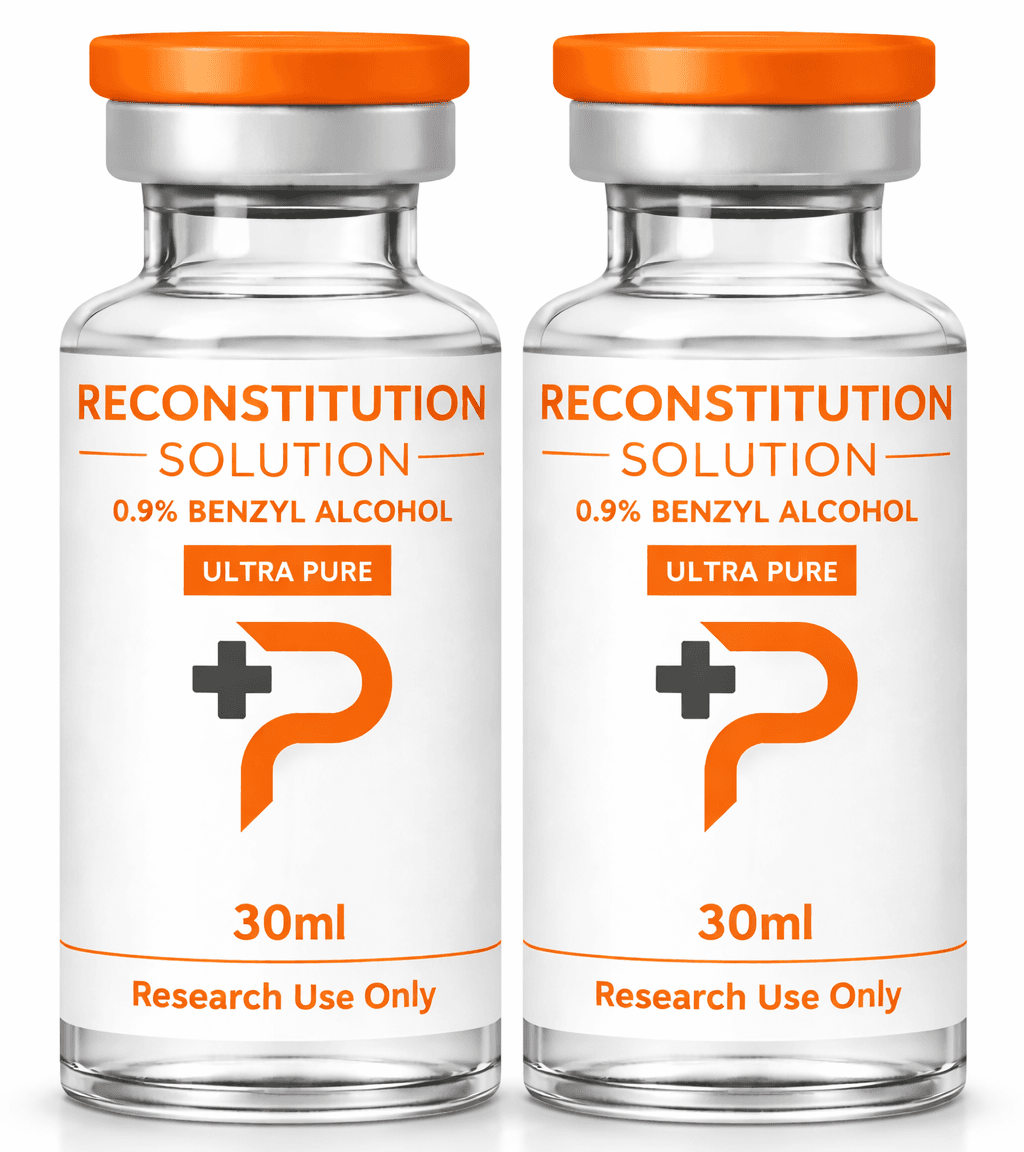
Reconstitution Solution 30 mL – Pack of 2
Manufactured with High-purity formulation. Batch quality controlled for consistent formulation quality. Laboratory Research Use Only.
View Product →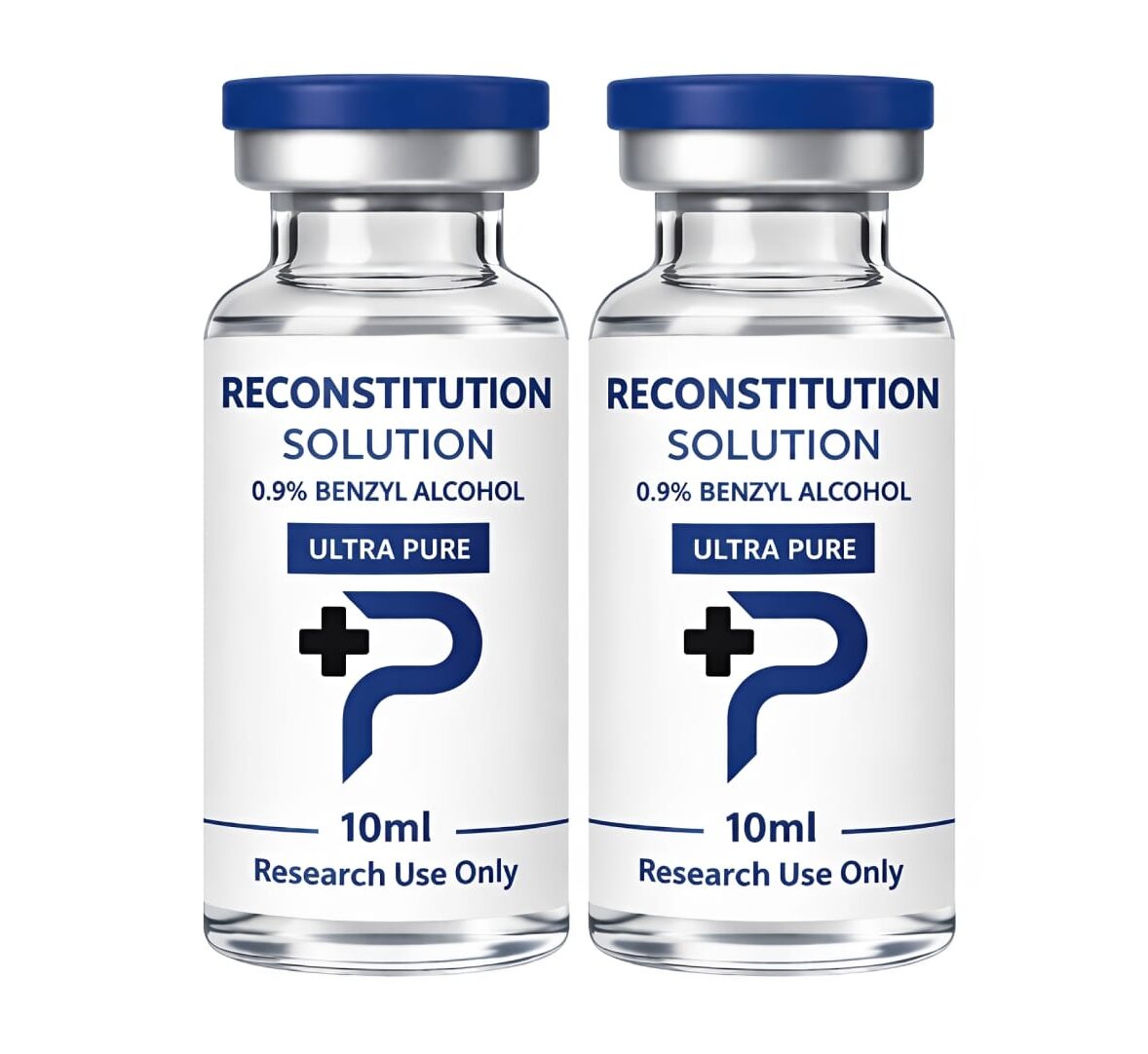
Reconstitution Solution 10 mL – Pack of 2
High-purity formulation manufactured using best-quality ingredients, sized for smaller-volume laboratory research applications. Laboratory Research Use Only.
View Product →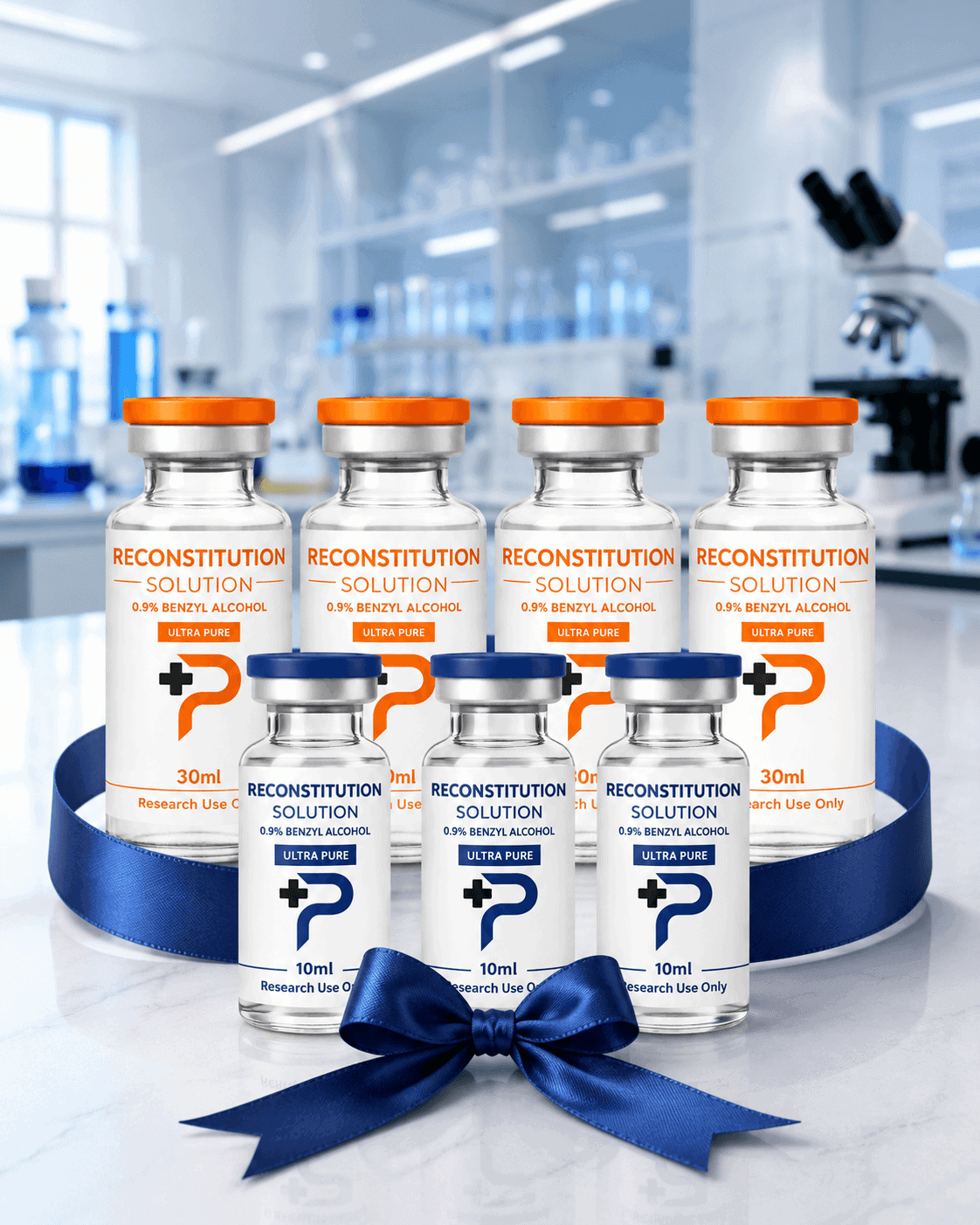
Bundle Deals
Curated bundles built from our Highly-Purified formulations, batch quality controlled for consistent formulation quality across every unit. Laboratory Research Use Only.
Explore Bundles →