
Why Is 0.9% Benzyl Alcohol Added to Bacteriostatic Water?
When people first look at the label on a vial of bacteriostatic water, one ingredient usually stands out — 0.9% benzyl alcohol. A common question soon follows: “Why is benzyl alcohol put in bacteriostatic water?” Some people assume it’s meant to make the solution stronger, or maybe they think it works like a disinfectant, or even that it provides therapeutic effects. But the reason is much more specific.
Introduction
Bacteriostatic water is formulated as a sterile diluent for specific pharmaceutical products, provided the manufacturer’s prescribing information identifies it as the appropriate sterile diluent. In this formula, Sterile Water for Injection, USP is combined with 0.9% benzyl alcohol, which functions as a bacteriostatic preservative. It is not included to change the therapeutic action of the liquid; instead, it helps to slow or inhibit bacterial reproduction if microorganisms are accidentally introduced after a multi-dose vial has been opened.
Still, the preservative should never be treated like a substitute for proper sterile handling. The product quality depends on aseptic technique, proper storage, sterile devices, and following the manufacturer’s directions carefully. The preservative supports the intended use for certain multi-dose products, but it does not restore sterility, nor does it make up for improper handling.
This guide covers why this preservative is included in the formulation, its role in the formulation, why it is relevant for certain multi-dose pharmaceutical products, and what the limitation of its preservative function is.
Quick Answer
Benzyl alcohol is added into the formulation as a bacteriostatic preservative. At a concentration of 0.9%, it slows down or helps inhibit bacterial growth if microbes are accidentally introduced after a multi-dose vial is opened. This supports the intended use for some multi-dose pharmaceutical products, but only when the product is used the way the manufacturer’s prescribing information says and when proper aseptic technique is followed.
Also, it’s good to keep in mind that 0.9% benzyl alcohol isn’t going to sterilize a contaminated solution, it won’t wipe out all microorganisms, and it does not replace correct sterile handling practices. Rather, it has that focused preservative role in the formulation, while overall product quality still relies on proper storage, careful handling, sterile equipment, and strict adherence to the manufacturer’s instructions.
Tables Of Content
- Why Is 0.9% Benzyl Alcohol Added to Bacteriostatic Water?
- What Is Benzyl Alcohol?
- How Benzyl Alcohol Functions as a Bacteriostatic Preservative?
- Why Benzyl Alcohol Supports Multi-Dose Vials
- What Benzyl Alcohol Does Not Do
- How Manufacturers Decide When to Use Benzyl Alcohol
- Common Misconceptions About Benzyl Alcohol in Bacteriostatic Water
- Frequently Asked Questions
What Is Benzyl Alcohol?
Before exploring why benzyl alcohol is put in bacteriostatic water, it helps to understand what benzyl alcohol is. The name can sound odd; it has a long history in medicinal preparation, and it plays a clear role. In bacteriostatic water, it appears around 0.9%, and it works as a preservative, so it can slow bacterial growth down, or sometimes even stop it, depending on the conditions.
In other words, the formulation isn’t just about dilution; it can actually help restrain or prevent microbial growth, especially in situations where a few microorganisms get introduced after a multi-dose vial is opened. This protective role helps certain multi-dose products stay aligned with their intended use, assuming they are handled as the manufacturer’s prescribing information and proper aseptic technique.
At the same time, it is important to clarify what benzyl alcohol will not do. It does not sterilize a solution that is already contaminated, it does not eliminate all microorganisms, and it also doesn’t replace proper sterile handling. The overall product quality still depends on careful storage, using sterile tools, practicing aseptic technique correctly, and following the manufacturer’s instructions.
Why Is 0.9% Benzyl Alcohol Added to Bacteriostatic Water?
One of the most common questions about this formulation is why the formulation includes 0.9% benzyl alcohol instead of just using sterile water alone. The answer lies in the product’s intended pharmaceutical purpose in a direct way.
The formulation includes 0.9% benzyl alcohol as a bacteriostatic preservative. Its job is to help slow down or inhibit bacterial growth if microorganisms are accidentally introduced after a multi-dose vial has been opened. That is relevant for certain multi-dose pharmaceutical products where they’re handled under the manufacturer’s prescribing information and with proper aseptic technique.
The preservative doesn’t improve the medication or change its therapeutic properties. It doesn’t make the drug more effective. Instead, it supports the overall formulation, helping maintain the product quality during the intended period of use. Even so, healthcare professionals still rely on established sterile handling procedures because aseptic technique stays essential throughout pharmaceutical preparation.
It’s also important to understand that 0.9% concentration isn’t arbitrary. That concentration is part of a validated pharmaceutical formulation, and it’s set through manufacturing and quality standards. It’s meant to deliver the preservative action that was planned, while also keeping the product within its approved composition.
Even though benzyl alcohol is a key part of this formulation, it still doesn’t automatically make the product the right fit for every medication. Certain pharmaceutical products instead need Sterile Water for Injection, Sodium Chloride Injection, or some other compatible sterile diluent. Because of this, healthcare professionals usually rely on the manufacturer’s prescribing information and the approved product labeling to decide on the suitable sterile diluent.
How Benzyl Alcohol Functions as a Bacteriostatic Preservative
Many people assume that the preservative in this sterile diluent is there mainly to sterilize the solution or keep it safe for good. But its role is more focused than that. Benzyl alcohol works as a bacteriostatic preservative, so it helps inhibit or even stop bacterial growth if microorganisms end up getting in after a multi-dose vial is opened. It also helps with the idea of using certain multi-dose pharmaceutical products, even if it can’t replace proper sterile technique.
Supports Multi-Dose Use
Every time a multi-dose vial is accessed, there is a small chance that microbes could be introduced, even when proper handling procedures are followed. The 0.9% benzyl alcohol helps reduce bacterial multiplication between repeated withdrawals so the product can better match its intended use when it is handled by the manufacturer’s prescribing information.
It Does Not Sterilize The Solution
One of the common misunderstandings is thinking benzyl alcohol can restore sterility after contamination has occurred. That is not what happens. Once contamination occurs, it can’t remove all microorganisms. Its role is limited to helping inhibit bacterial growth under the product’s intended conditions of use.
Proper aseptic technique still matters
Even if the benzyl alcohol does supply bacteriostatic preservative activity, healthcare professionals still rely on the established aseptic routine every single time the vial gets accessed. That means a new sterile needle and syringe for each withdrawal, disinfecting the vial stopper before every vial access, and handling the vial in a way that stays within proper aseptic technique. They also keep to the manufacturer’s instructions for storage and handling. Then at the end, the product is thrown away using the manufacturer’s expiration date.
It works alongside the formulation
Benzyl alcohol does not alter the pharmaceutical purpose of Sterile Water for Injection, USP. Instead, established work together to build a sterile diluent suited for specific uses. Sterile Water for Injection, USP, acts as the sterile base, while 0.9% benzyl alcohol brings in a bacteriostatic preservative activity. Together they help support the intended use when the prescribing information from the manufacturer specifically notes that bacteriostatic water is the right sterile diluent.
Why this function Matters
Figuring out how benzyl alcohol behaves, it actually helps explain why the preservative is not just the same as preservative-free sterile water for injection. The preservative part allows the product an easier time to support the intended use of some multi-dose vials, but it does not fully remove the need for compatibility conditions, proper storage, or using aseptic technique.
In practice, clinicians and pharmacists still go back to the manufacturer’s prescribing information and the approved product labeling to determine if bacteriostatic water is a fit for a given pharmaceutical preparation.
Why Benzyl Alcohol Supports Multi-Dose Vials
One of the main reasons that 0.9% benzyl alcohol is included in the formulation is to help with the intended purpose of some multi-dose vials. Compared with single-dose products, multi-dose vials can be reached more than once during their labeled period of use. Each time you open and use the vial, there is a small access point where microorganisms from the surrounding area can be brought in. Even if people are careful, this risk cannot really be eliminated.
The bacteriostatic preservative is there to slow down, or in other words, inhibit bacterial growth if microorganisms are accidentally introduced after the vial is opened. This way, the preservative effect supports the product’s intended use during repeated withdrawals, as long as the vial is handled according to the manufacturer’s prescribing information and the established aseptic procedures are followed.
Still, the existence of 0.9% benzyl alcohol should not be introduced. Clinicians should keep disinfecting the vial stopper before each access, use a new sterile needle and syringe every time a withdrawal is done, check the solution before using it, and keep the product stored according to the manufacturer’s instructions. These steps together help keep the quality steady during the full intended period of use.
It’s also worth noting that not every medicine is meant for repeated withdrawals. Whether a product comes as a multi-dose vial versus a single-dose container depends on the approved formulation and the labeling.
What Benzyl Alcohol Does Not Do
Even though 0.9% benzyl alcohol provides bacteriostatic preservative activity, its limitations are often misunderstood. Knowing what the preservative does not do is almost as important as knowing the intended function.
In practice, benzyl alcohol does not:
- Sterilize a solution that is already contaminated.
- Kill microorganisms.
- Restore sterility once contamination has already happened.
- Replace proper aseptic technique for “something else.”
- Remove the need for sterile equipment.
- Allow a product to go past its labeled expiration date, or ignore the beyond-use guidance.
- Make bacteriostatic water compatible with every pharmaceutical product.
These boundaries help explain why clinicians keep using validated sterile handling procedures even with a preservative present.
How Manufacturers Decide When to Use Benzyl Alcohol
The choice to add 0.9% benzyl alcohol in this formulation is, in practice, based on pharmaceutical formulation needs then. During product development, manufacturers evaluate what the product is meant to do, formulation compatibility, stability timelines, manufacturing standards, and what quality expectations look like before they settle on the final blend.
Every ingredient serves a defined purpose, not something vague. Sterile Water for Injection, USP gives the sterile base, while 0.9% benzyl alcohol provides bacteriostatic preservative action in a clear way. After that, the formulation is produced in controlled pharmaceutical conditions, then it goes through validation, sterility testing, and quality control checks to support consistency across production batches.
Manufacturers also determine whether a preservative is appropriate for the product’s intended use. Some medicines need a preservative-free setup, whereas others are formulated as multi-dose products, and they intentionally include bacteriostatic preservative activity. You can usually see these outcomes reflected in the manufacturer’s prescribing information and the approved product labeling.
Common Misconceptions About Benzyl Alcohol in Bacteriostatic Water
Because 0.9% benzyl alcohol is an important part of this formulation, many people start having misconceptions about what it is meant for. If you get the facts straight, it becomes more straightforward to understand the preservative’s real function and not just assume things.
Myth 1: Benzyl alcohol makes the solution sterile again
Benzyl alcohol can probably slow down or inhibit bacterial growth, but it still can’t “re-sterilize” anything once contamination has already happened.
Myth 2: the preservative just replaces good aseptic technique
Even when a bacteriostatic preservative is there, healthcare professionals still must do the usual sterile steps properly. Like storage conditions, sterile equipment, and careful aseptic technique, they are still required, not optional.
Myth 3: Products with benzyl alcohol can be used for any medication
This is not correct. Just because a preservative is present doesn’t mean it automatically makes the solution compatible with every medication. The proper sterile diluent is chosen based on the manufacturer’s prescribing information and the approved product labeling.
Conclusion
Even though 0.9% benzyl alcohol is only a small part of the formulation, it still has a real pharmaceutical impact. Instead of getting into the whole question of what the sterile water does, benzyl alcohol basically acts like a bacteriostatic preservative. In practical terms, it helps slow or even restrict bacterial growth when microorganisms get into a multi-dose vial after it’s been opened. That preservative effect supports the purpose of some multi-dose products and also helps keep more consistent quality as long as people handle it the right way.
At the same time, benzyl alcohol does come with boundaries. It does not sterilize solutions that are already contaminated, it cannot stand in for correct aseptic technique, and it does not mean that the product is automatically suitable for every single pharmaceutical situation. Choosing the right product should always be steered by the manufacturer’s prescribing information, the approved labeling, and the compatibility as well as stability needs.
What People Ask?
1. Is benzyl alcohol the active ingredient in bacteriostatic water?
No. Benzyl alcohol isn’t the “active ingredient” in the way people assume. It functions as a bacteriostatic preservative, while Sterile Water for Injection, USP is the sterile base, or sterile base of the formulation. Together they form this sterile diluent, and it’s meant for some pharmaceutical purposes, but only when everything lines up with what the manufacturer lays out in the prescribing information.
2. Why does bacteriostatic water come with 0.9% benzyl alcohol?
The 0.9% benzyl alcohol is put in because it helps slow down , or it can actually suppress bacterial growth if microbes get introduced after a multi-dose vial is opened. In other words, that concentration is meant to support the goal of some multi-dose items, it doesn’t give you permission to relax aseptic technique or treat sterile handling as optional.
3. Does benzyl alcohol sterilize a contaminated solution?
No. Benzyl alcohol doesn’t sterilize a contaminated solution, and it definitely doesn’t wipe out every microorganism. It can inhibit bacterial growth, but only under the intended conditions of use. Once contamination has already happened, it can’t bring the solution back to sterility.
4. Is bacteriostatic water the same as Sterile Water for Injection?
No. It is not the same as Sterile Water for Injection, USP. Both may use Sterile Water for Injection, USP as the base, but bacteriostatic water also includes 0.9% benzyl alcohol, which gives it a preservative-like, bacteriostatic effect. Because of that extra component, they are different products, and they are not interchangeable unless the manufacturer ’s prescribing information specifically says you can swap them.
5. Does benzyl alcohol replace good aseptic technique ?
No, benzyl alcohol does not replace proper aseptic technique. Even if you have 0.9% benzyl alcohol present, healthcare professionals still use sterile equipment. They disinfect vial stoppers and they follow the storage directions correctly and they keep using the established aseptic method the whole time, during the preparation process.
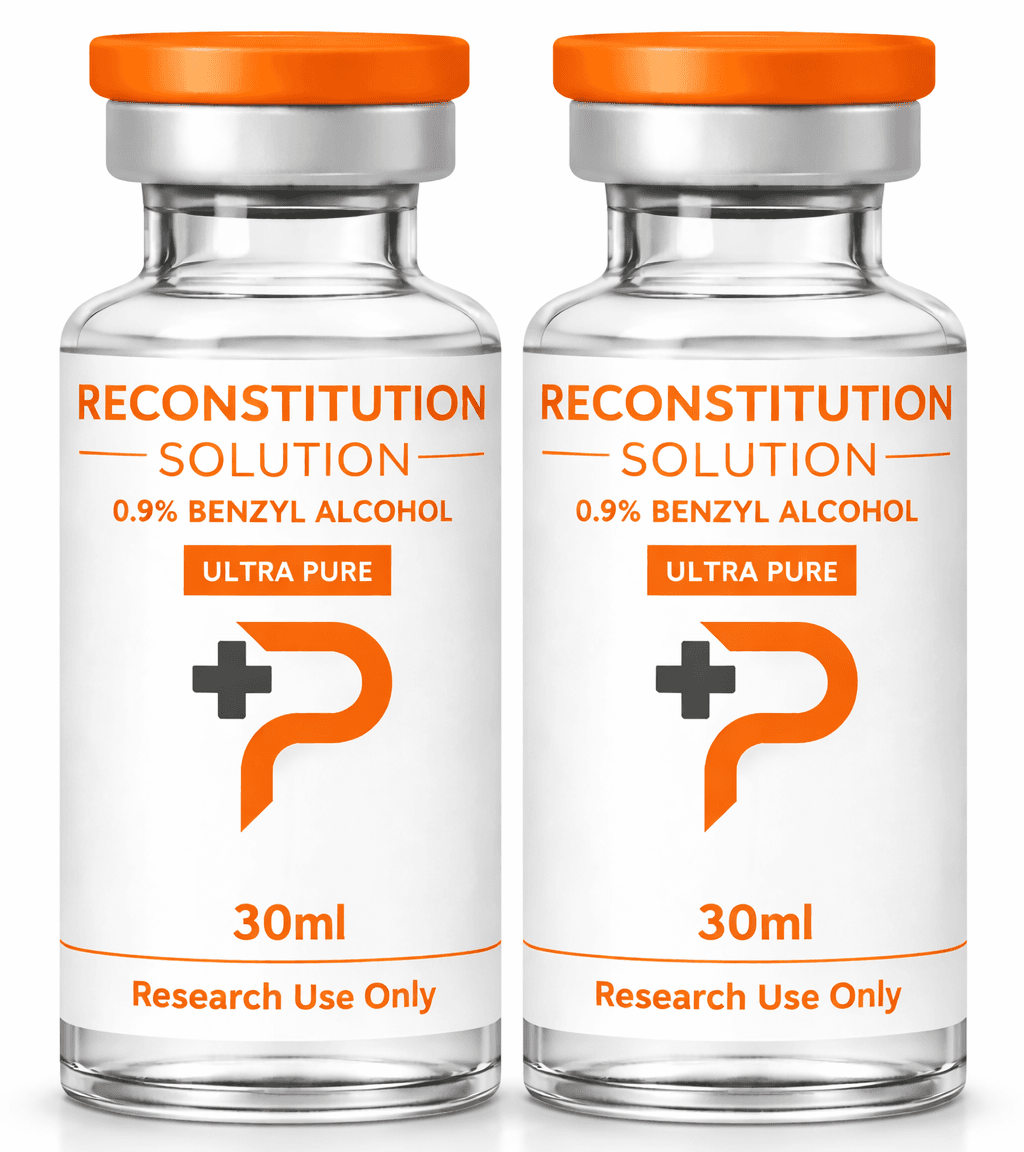
Reconstitution Solution 30 mL – Pack of 2
Manufactured with High-purity formulation. Batch quality controlled for consistent formulation quality. Laboratory Research Use Only.
View Product →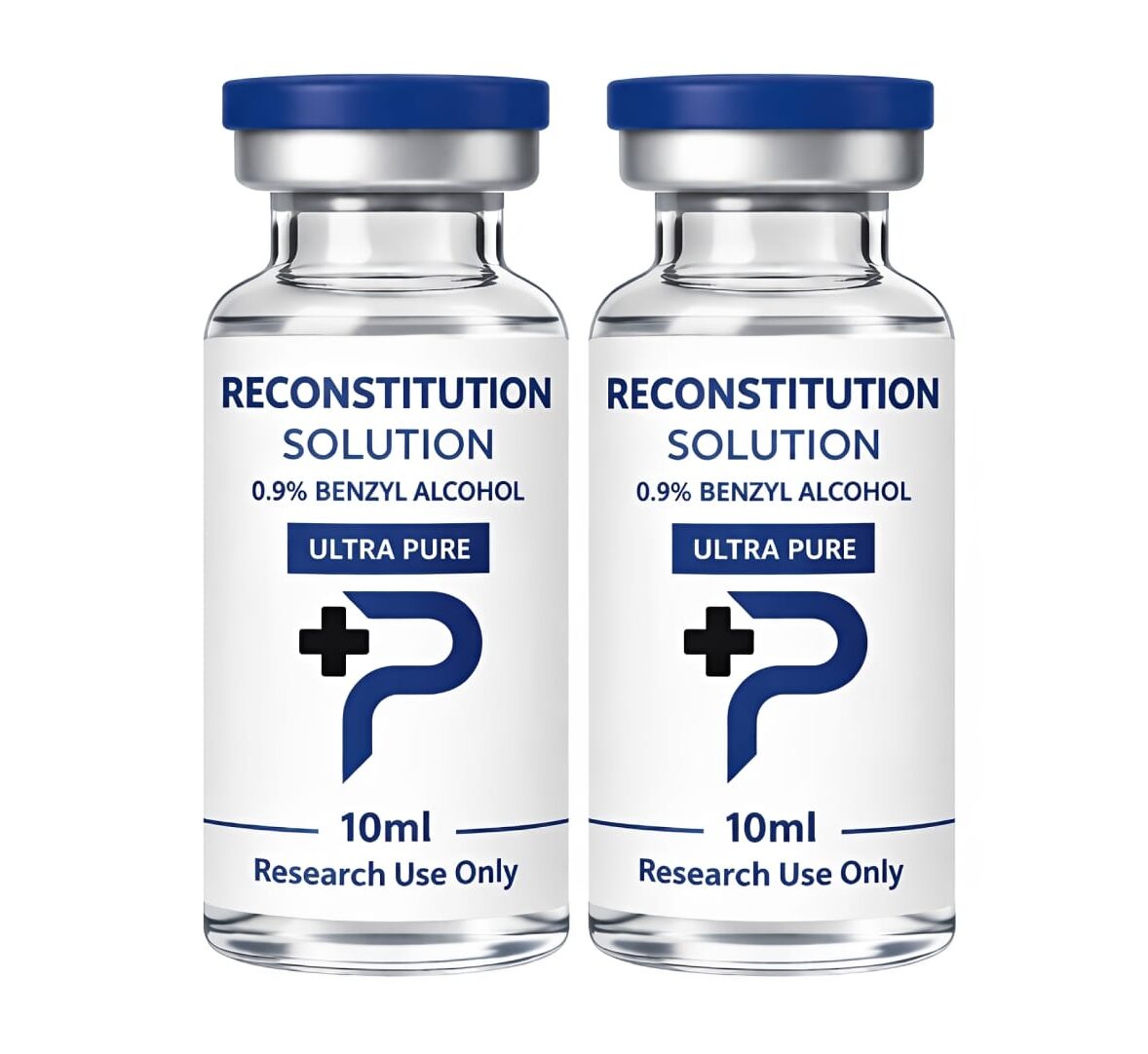
Reconstitution Solution 10 mL – Pack of 2
High-purity formulation manufactured using best-quality ingredients, sized for smaller-volume laboratory research applications. Laboratory Research Use Only.
View Product →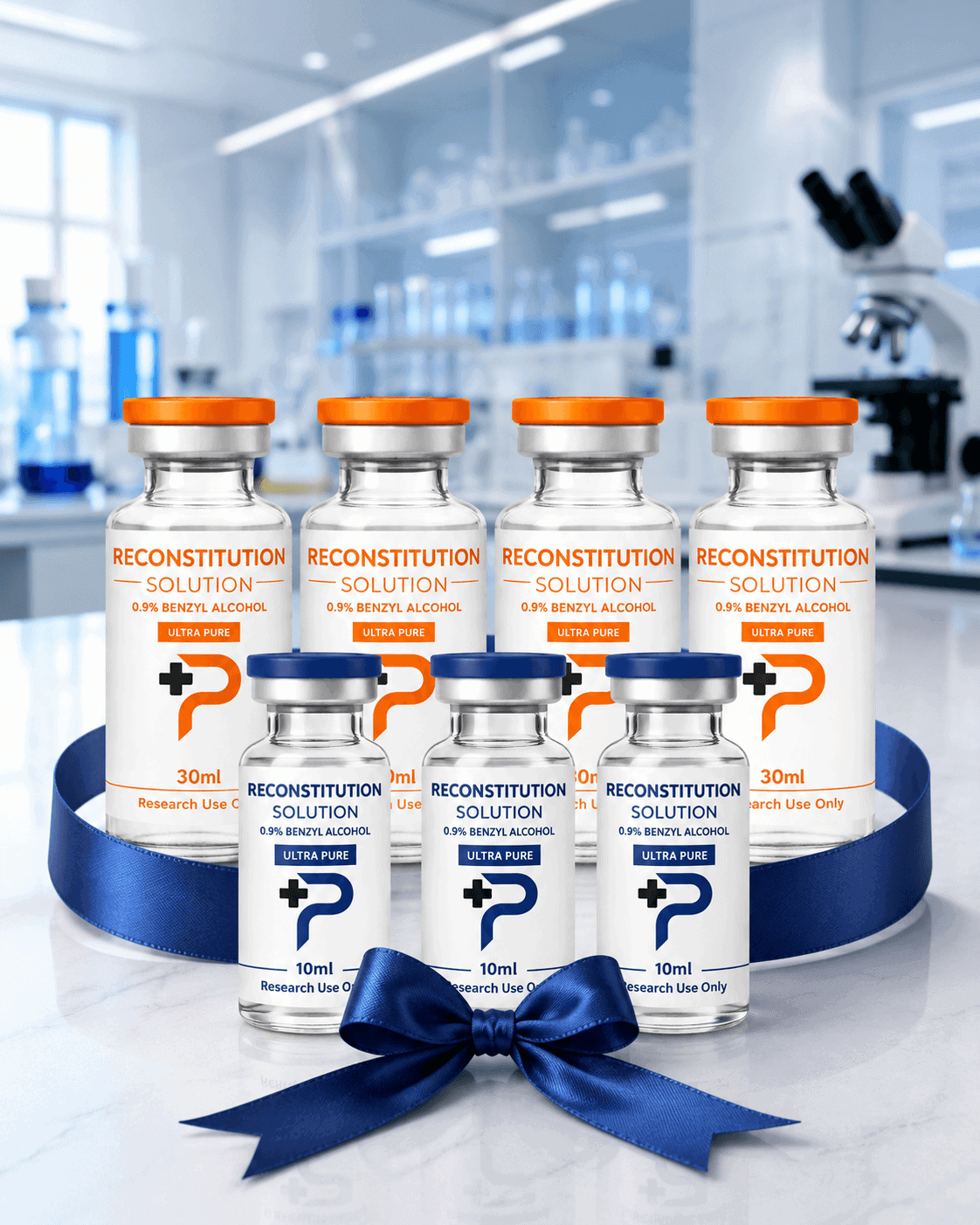
Bundle Deals
Curated bundles built from our Highly-Purified formulations, batch quality controlled for consistent formulation quality across every unit. Laboratory Research Use Only.
Explore Bundles →