What Is Bacteriostatic Water? The Complete Beginner's Guide
So if you’ve been looking into medication preparation, sterile diluents, or just general lab workflows, you’ve probably seen the phrase bacteriostatic water at least once. And, it can feel technical, but it’s one of those sterile products people lean on when they need more than plain water for certain steps.
Pharmera Health is committed to product quality, transparent product information, and dependable service for laboratory research supply needs.
Introduction
Understanding what bacteriostatic water is and why it isn’t the same as other sterile waters really matters if you’re getting into pharmaceutical preparation or everyday healthcare handling. Bacteriostatic water isn’t just ordinary purified water or distilled water. It’s made with a specific purpose in mind. Meaning there’s a preservative added, so bacterial growth is slowed down after the vial gets opened. That preservative is there to support stability in situations where the container ends up being treated like a multi-dose vial. Of course, whether it’s the right fit depends on the exact product label because the manufacturer will say what it’s intended for and in what conditions.
In this guide, we’ll sort out what bacteriostatic water is, how it works, what ingredients you’ll find in it, and where you typically run into it in real use. We’ll also cover storage practices, sterility ideas, manufacturing basics, and how it compares against other sterile diluents. And if you like, there are usually related resources too, with separate pages for each theme, so you don’t end up blending everything together in one place.
If you’d like a closer look at the formulation itself, including the role of each ingredient, read our guide on What Is in Bacteriostatic Water? Ingredients Explained.
Important note: This article is only for learning. It isn’t medical advice, and it doesn’t explain how to use any medication. Always follow the manufacturer’s prescribing information, and if you’re unsure, discuss it with a qualified healthcare professional.
Quick Answer
Bacteriostatic water is sterile water, but it has 0.9% benzyl alcohol in it, which is a preservative that inhibits bacterial growth once the vial has been opened. You’ll usually find it packed in multi-dose vials, and people often use it as a sterile diluent for certain medications when specified by the manufacturer’s labeling. Even with the preservative, it still has to be handled with proper aseptic technique and in accordance with the approved product instructions, not “loosely” or from memory.
Key Takeaways
- Bacteriostatic water is basically sterile water with 0.9% benzyl alcohol in it.
- The preservative sort of helps block or slow bacterial growth after someone opens the vial; not always does everyone think about this part.
- You’ll often see it supplied as multi-dose vials, so it’s made for repeated access.
- It’s different from sterile water, plain and simple, mainly because it includes that preservative ingredient.
- You should only use it when it fits with the manufacturer’s prescribing information.
- Even with the preservative, proper sterile handling still stays essential, and you can’t really skip good technique.
- Things like storage conditions, expiration dates, and overall product quality all play into whether it stays safe.
- Learning what bacteriostatic water is can also help you tell it apart from other sterile diluents and not mix things up later.
Tables Of Content
- What Is Bacteriostatic Water?
- Key Characteristics of Bacteriostatic Water
- What’s Inside Bacteriostatic Water?
- How Does Bacteriostatic Water Work?
- Common Uses in Healthcare, and Lab Settings
- Understanding Multi-Dose Vials
- Why Benzyl Alcohol Gets Used
- Safety Considerations
- Common Misunderstandings
- Regulatory Standards
What Is Bacteriostatic Water?
It’s straightforward: bacteriostatic water is sterile water that contains small amounts, roughly 0.9%, of benzyl alcohol included as a preservative. This small addition makes it act different from plain sterile water for injection, and it’s the reason it works with multi-dose containers. The word “bacteriostatic” means it slows down or inhibits bacterial growth; it doesn’t fully wipe out the bacteria. That part is important because the preservative isn’t meant to “sterilize” something that’s already contaminated, and it doesn’t replace good sterile technique either. Instead, it just helps reduce bacterial overgrowth if tiny microorganisms somehow get in during repeated punctures or withdrawals from the vial, even though that’s not supposed to happen.
This kind of water is manufactured under strict pharmaceutical quality rules so it’s sterile before the container is opened. After that, healthcare professionals usually follow what the manufacturer prints on the label, plus the prescribed directions and the standard sterile handling routine, to decide when it fits the situation.
So, it’s not a do-it-yourself item; you don’t just substitute whatever is around. Also, it functions more like a sterile diluent, not like an active treatment. In other words, bacteriostatic water doesn’t provide therapeutic effects on its own. Its main role is preparation support, meaning it helps when a drug manufacturer specifies you to use it for reconstitution or dilution.
Why Is It Called "Bacteriostatic"?
The word can be broken down into two pieces: Bacterio and Static. Bacterio is mostly about bacteria, while static means to halt, slow down, or inhibit growth. Put together, it describes a solution that helps stop bacteria from multiplying rather than erasing them completely. This distinction matters because many people assume bacteriostatic water is the same thing as antibacterial. But the preservative’s role is mainly to help maintain the quality of a properly handled multi-dose vial. It is not a substitute for aseptic technique, proper storage, or the manufacturer’s instructions.
Key Characteristics of Bacteriostatic Water
A few features make bacteriostatic water distinguish from other sterile diluents.
1.Sterile formulation
Bacteriostatic water is made so it meets pharmaceutical sterility standards before it leaves the production site. But keeping it sterile depends on what happens after the vial is opened.
2. Contains 0.9% benzyl alcohol
One of the defining traits is that it contains 0.9% benzyl alcohol. Instead of changing what the water is used for, the benzyl alcohol works as a kind of preservative, and it helps to slow down bacterial growth, particularly with multi-dose containers.
Want to understand why this preservative is included in the formulation? Read our guide on Why Is 0.9% Benzyl Alcohol Added to Bacteriostatic Water? For a detailed explanation of its role, limitations, and why it’s used in multi-dose vials.
3. Intended for multi-dose vials
Unlike many sterile water products that are meant for single use, bacteriostatic water is often shipped in multi-dose vials; it’s not just one-and-done. These containers are set up so you can take multiple withdrawals, provided you do follow the manufacturer’s directions and you keep up with proper aseptic technique.
4. Used as a Sterile Diluent
Bacteriostatic water is commonly described as a sterile diluent, basically a kind of sterile liquid step that is practical.
A diluent is a sterile liquid used in the preparation of certain medications before administration when the manufacturer’s labeling says that’s how it should be handled.
The selection of diluent depends on the product’s prescribing information. Different medications may call for different sterile solutions, so bacteriostatic water shouldn’t be taken as a default option for every situation.
5. Manufactured Under Pharmaceutical Standards
Bacteriostatic water is produced inside controlled manufacturing environments, using validated pharmaceutical processes that are meant to help ensure the product quality and the sterility. Typically, this kind of work happens under strict procedures where each step is carefully watched and double-checked. You can think of it as a kind of combined workflow—not just one action because that would be too easy. The process generally includes water purification, sterile filtration, and then controlled filling. After that, there is container integrity testing, quality assurance procedures, and batch testing too. Sometimes they also describe these as a series of quality checkpoints, rather than separate tasks, which is fair enough.
What's Inside Bacteriostatic Water?
INGREDIENT |
PURPOSE |
|---|---|
Sterile Water for Injection
|
Works as the sterile base solution
|
0.9% Benzyl Alcohol
|
Helps slow bacterial growth after you open it
|
Also, there are no added medications, active pharmaceutical ingredients, colorants, or flavoring agents. Since the formulation is kept purposely simple, each ingredient has a clear and specific job to do. The sterile water ends up being the carrier solution, while benzyl alcohol supports the intended use of multi-dose packaging, or at least that’s the idea behind it.
One more thing: different manufacturers may show different labeling, storage recommendations, and product details. Healthcare professionals follow those instructions instead of guessing based on something similar.
How Does Bacteriostatic Water Work?
Bacteriostatic water works by combining sterility and adding preservative cover. Before opening, the solution is produced and sealed under sterile pharmaceutical conditions to help ensure its quality and sterility. After the vial is opened, every single time you access the container, there is a small chance of environmental contamination creeping in. Still, the 0.9% benzyl alcohol provides help by slowing bacterial multiplication if microorganisms are accidentally introduced during those repeated withdrawals.
But this kind of protection has clear boundaries, and it can’t do everything people might assume.
The preservative does not
- Sterilize contaminated equipment
- Replace aseptic technique
- Fix improper handling
- Make expiration dates last longer
- Assure product safety when storage conditions are poor
Instead, it’s only one piece of a wider method that includes sterile manufacturing, appropriate storage, careful use, and following the manufacturer labeling exactly. Getting these limits clear is important because it reminds you that product quality depends on several things—not just whether a preservative is present.
Common Uses of Bacteriostatic Water in Healthcare and Laboratory Settings
Bacteriostatic water is used across a range of professional settings where having sterile preparation is important. It doesn’t act like a medication in its own right. Instead, it works like a sterile diluent for certain pharmaceutical products, but only when the manufacturer’s prescribing information says it’s an appropriate pick or option for that use.
Most often, its function shows up during medication preparation, research workflows, and those healthcare processes where you need a sterile solution stored in a multi-dose vial. You might run into it in hospitals and healthcare facilities, outpatient clinics, compounding pharmacies, research laboratories, academic teaching laboratories, and even within pharmaceutical manufacturing environments.
What it’s used for exactly depends on the product being made or handled. Healthcare professionals always confirm compatibility by checking the manufacturer’s labeling, rather than assuming that one type of sterile diluent can simply replace another.
Why Is It Used as a Diluent?
Many medications are produced as powders or concentrates so they can keep their stability while they’re stored. Before they can be given, you might have to reconstitute them using a compatible sterile diluent; sometimes that’s not so simple. When the prescribing information says bacteriostatic water, it’s basically telling you it’s a sterile solution with preservative support meant for multi-dose use. But not every medication plays well with bacteriostatic water. Some products need Sterile Water for Injection, Normal Saline, or another sterile diluent entirely. If you use the wrong one, even mistakenly, it can change the product quality, and that may mess with the intended use.
To learn more about where bacteriostatic water is commonly used in healthcare, research, and pharmaceutical settings, read our guide on What Is Bacteriostatic Water Used For?
Understanding Multi-Dose Vials
One of the defining features of bacteriostatic water is that it is commonly supplied in multi-dose vials. Unlike single-dose containers that are intended for one-time use, multi-dose vials are made so you can do multiple withdrawals, as long as you follow the manufacturer’s labeling and keep a proper aseptic technique. That setup can be practical in professional healthcare settings because the same vial might be accessed more than once during its approved window of use.
What makes a multi-dose vial different?
One of the defining features of bacteriostatic water is that it is commonly supplied in multi-dose vials. Unlike single-dose containers that are intended for one-time use, multi-dose vials are made so you can do multiple withdrawals, as long as you follow the manufacturer’s labeling and keep a proper aseptic technique. That setup can be practical in professional healthcare settings because the same vial might be accessed more than once during its approved window of use.
Also, there are no added medications, active pharmaceutical ingredients, colorants, or flavoring agents. Since the formulation is kept deliberately simple, each ingredient has a clear and specific job to do. The sterile water ends up being the carrier solution, while benzyl alcohol supports the intended use of multi-dose packaging, or at least that’s the idea behind it.
One more thing: different manufacturers may show different labeling, storage recommendations, and product details. Healthcare professionals follow those instructions instead of guessing based on something similar.
How Does Bacteriostatic Water Work?
Bacteriostatic water works by combining sterility and adding preservative cover. Before opening, the solution is produced and sealed under sterile pharmaceutical conditions to help ensure its quality and sterility. After the vial is opened, every single time you access the container, there is a small chance of environmental contamination creeping in. Still, the 0.9% benzyl alcohol provides help by slowing bacterial multiplication if microorganisms are accidentally introduced during those repeated withdrawals.
But this kind of protection has clear boundaries, and it can’t do everything people might assume.
The preservative does not
- Sterilize contaminated equipment
- Replace aseptic technique
- Fix improper handling
- Make expiration dates last longer
- Assure product safety when storage conditions are poor
Instead, it’s only one piece of a wider method that includes sterile manufacturing, appropriate storage, careful use, and following the manufacturer labeling exactly. Getting these limits clear is important because it reminds you that product quality depends on several things—not just whether a preservative is present.
Common Uses of Bacteriostatic Water in Healthcare and Laboratory Settings
Bacteriostatic water is used across a range of professional settings where having sterile preparation is important. It doesn’t act like a medication in its own right. Instead, it works like a sterile diluent for certain pharmaceutical products, but only when the manufacturer’s prescribing information says it’s an appropriate pick or option for that use.
Most often, its function shows up during medication preparation, research workflows, and those healthcare processes where you need a sterile solution stored in a multi-dose vial. You might run into it in hospitals and healthcare facilities, outpatient clinics, compounding pharmacies, research laboratories, academic teaching laboratories, and even within pharmaceutical manufacturing environments.
What it’s used for exactly depends on the product being made or handled. Healthcare professionals always confirm compatibility by checking the manufacturer’s labeling, rather than assuming that one type of sterile diluent can simply replace another.
Why Is It Used as a Diluent?
Many medications are produced as powders or concentrates so they can keep their stability while they’re stored. Before they can be given, you might have to reconstitute them using a compatible sterile diluent; sometimes that’s not so simple. When the prescribing information says bacteriostatic water, it’s basically telling you it’s a sterile solution with preservative support meant for multi-dose use. But not every medication plays well with bacteriostatic water. Some products need Sterile Water for Injection, Normal Saline, or another sterile diluent entirely. If you use the wrong one, even accidentally, it can change the product quality, and that may mess with the intended use. For more on medication preparation, take a look at our guide, What Is Bacteriostatic Water Used For?
Understanding Multi-Dose Vials
One of the defining features of bacteriostatic water is that it is commonly supplied in multi-dose vials. Unlike single-dose containers that are intended for one-time use, multi-dose vials are made so you can do multiple withdrawals, as long as you follow the manufacturer’s labeling and keep a proper aseptic technique. That setup can be practical in professional healthcare settings because the same vial might be accessed more than once during its approved window of use.
What makes a multi-dose vial different?
One of the defining features of bacteriostatic water is that it is commonly supplied in multi-dose vials. Unlike single-dose containers that are intended for one-time use, multi-dose vials are made so you can do multiple withdrawals, as long as you follow the manufacturer’s labeling and keep a proper aseptic technique. That setup can be practical in professional healthcare settings because the same vial might be accessed more than once during its approved window of use.
Multi-Dose Vials |
Single-Dose Vials |
|---|---|
Contain a preservative
|
Generally preservative-free. Made for multiple withdrawals
|
Intended for one use.Need careful aseptic handling
|
Discarded after use per labeling
|
Often list beyond-use timing after opening
|
No repeated access is meant
|
Now, benzyl alcohol is there to support the intended multi-dose use, but it does not fully wipe out contamination risks. Still, every time the vial is opened or accessed, proper sterile handling stays essential.
If you’re wondering why benzyl alcohol is used instead of leaving the solution preservative-free, our guide on Why Is 0.9% Benzyl Alcohol Added to Bacteriostatic Water? Explains the science behind its bacteriostatic function.
What makes a multi-dose vial different?
Maintaining sterility involves much more than simply using a preservative. In practice, healthcare professionals follow established aseptic habits such as:
- Cleaning the vial stopper before each access
- Using new sterile needles and syringes when appropriate
- Avoiding unnecessary handling of the vial
- Following the manufacturer’s storage recommendations
- Monitoring expiration dates and beyond-use guidance
Why Does Bacteriostatic Water Contain Benzyl Alcohol?
Maybe the very first question beginners ask is why bacteriostatic water has 0.9% benzyl alcohol in it. And the reply is simple, at least compared to what people expect. Benzyl alcohol is used as a preservative, so it can slow down bacterial growth if some microorganisms end up in the vial after it’s been opened. In other words, it’s there to make multi-dose containers actually work the way they’re supposed to because with repeated withdrawals, you want to reduce the chances of bacterial multiplication, not speed it up.
What benzyl alcohol does
- Helps inhibit bacterial growth
- Supports multi-dose vial use
- Contributes to product quality when handled correctly
And what benzyl alcohol does not do, even though people sometimes assume otherwise:
- Does not kill every microorganism
- Does not sterilize contaminated equipment
- Does not replace proper aseptic technique
- Does not make improper storage acceptable
- Does not extend expiration dates
Getting these limits straight matters just as much as knowing the benefits. Many misconceptions pop up because people think the preservative makes it “self-sterilizing” or something similar, but that’s not accurate.
Important Safety Considerations
Even though bacteriostatic water is commonly used in health care settings, it should still be considered inside the broader context of proper pharmaceutical practice. You can’t just treat it as “one thing only” and ignore everything else. This article is not meant to give directions for preparing or administering medication. Instead, it explains the overall ideas that help with safer product handling, and that includes the basics people sometimes rush past.
Follow the Manufacturer Labelling
Healthcare institutions also commonly reference professional pharmacy practice standards and educational resources published by the American Society of Health-System Pharmacists (ASHP).
- The product’s intended use
- Compatible diluents
- Storage recommendations
- Expiration and beyond-use guidance
- Product-specific precautions
Not all pharmaceutical products behave the same. So one sterile diluent should not be swapped for another unless the manufacturer’s labeling explicitly allows that, not just “generally suggests” it.
Proper Storage Matters
Product quality is more than just whether it was sterile when it was made. Conditions around it matter, like temperature control, light exposure, and how the container is handled day to day. For that reason, any storage advice should track the manufacturer’s instructions first and only then fit into local workflow.
Many people mix up an unopened product’s expiration date with what applies after the vial is opened. These two things are separate, even if they sound similar on the surface. The manufacturer’s expiration date usually refers to the unopened product when stored under recommended conditions. Beyond-use guidance, on the other hand, deals with what happens after you first access the vial.
Common Misconceptions About Bacteriostatic Water
Because bacteriostatic water is widely discussed online, a few misconceptions keep continuing to circulate. If you take time to understand what’s actually going on, it can be easier for readers to make sense of the product details.
Myth 1: It Is the Same as Sterile Water
Fact: Yes, both can be sterile, but bacteriostatic water has 0.9% benzyl alcohol in it, while sterile water for injection is usually preservative-free.
Myth 2: The Preservative gets rid of every bacteria
Fact: Benzyl alcohol can help inhibit bacterial growth. But it is not a disinfectant, and it does not sterilize something that’s already contaminated.
Myth 3: It can swap in for any sterile diluent
Fact: Medications are not all the same, so their compatibility rules vary. Healthcare professionals rely on the manufacturer’s labeling to determine the appropriate diluent rather than substituting one sterile solution for another
Myth 4: Storage conditions really don’t matter
Fact: Proper storage remains essential for maintaining product quality. Inappropriate storage conditions can affect the product’s integrity and sterility throughout its intended shelf life.
Myth 5: All multi-dose vials are identical
Fact: Manufacturers may use different labels, storage directions, preservative formulations, and even different intended uses depending on the exact product.
Regulatory Standards and Quality Assurance
Bacteriostatic water is made inside a monitored pharmaceutical manufacturing framework that is meant to help keep things consistent, sterile, and overall product quality there. Manufacturers usually rely on solid quality systems, which can include things like:
- Sterility Testing
- Environmental Monitoring
- Water Purification Validation
- Container Closure integrity testing
- Plus Batch Quality Control
- Documentation Stuff and Traceability too, so nothing gets lost.
In the United States, companies typically build sterile pharmaceutical products while following the relevant regulatory expectations and widely used quality standards. That means looking at guidance from the U.S. Food and Drug Administration (FDA) and also aligning with standards that are published by the United States Pharmacopoeia (USP).
These standards are there to support that the product actually meets the right specifications before it ever reaches healthcare facilities, pharmacies, and laboratories.
And quality assurance doesn’t just stop once manufacturing is done. Correct shipment, storage, and handling matter just as much because they help preserve product integrity across the entire lifecycle, even after it leaves the plant.
Conclusion
Bacteriostatic water isn’t just “sterile water with a preservative” or something like that. It’s a more specialized pharmaceutical solution made for particular healthcare and lab uses when it’s applied exactly the way the manufacturer lists on the label. The formulation, including 0.9% benzyl alcohol, helps slow down bacterial growth after a multi-dose vial has been opened, but it is not a substitute for careful sterile handling, correct storage, or following the approved directions for the product.
If you’re a beginner, grasping the basic idea behind bacteriostatic water is basically the starting line for bigger topics like medication reconstitution, aseptic technique, pharmaceutical manufacturing, and product stability. Don’t treat it as fully exchangeable with other sterile diluents because each sterile solution has its own intended job, its own compatibility questions, and its own manufacturer guidance you’re supposed to respect.
If you’re specifically researching medication preparation, you may also find our guides on Bacteriostatic Water for Injection Explained and Bacteriostatic Water for Peptides helpful, as they cover how bacteriostatic water fits into different pharmaceutical and research applications.
What People Ask?
1. What is bacteriostatic water used for?
Bacteriostatic water is usually used as a sterile diluent for some medications, if the manufacturer’s prescribing information says it’s an acceptable option. You can also run into it in healthcare and pharmacy work , plus in research and laboratory settings where a sterile preparation is needed. In every case, what it’s used for comes back to the product’s approved labeling, because that part is what actually matters.
2. Is bacteriostatic water the same as sterile water?
No, both products are sterile, but bacteriostatic water has 0.9% benzyl alcohol, while Sterile Water for Injection is usually preservative free. so, this bit changes the intended use a lot, as well as the way they’re packed and how they might play with certain drug formulations. They really should not be thought as interchangeable, unless the manufacturer labeling says so explicitly, or something like that.
3. Why does bacteriostatic water contain benzyl alcohol?
Benzyl alcohol can be used as a preservative, it helps curb bacterial growth once the vial has been opened. The main intent is to back the planned use of multi dose vials by lowering the odds of bacterial multiplication during repeated withdrawals. However it does not stand in for proper sterile handling, and it also wont erase contamination risks, even if it sounds like it could.
4. Can bacteriostatic water be used for every medication?
No, the right diluent mostly depends on the manufacturers prescribing info for that specific medication. Some products call for Sterile Water for Injection, Normal Saline, or some other sterile solution. Health care professionals always double check compatibility before they prepare anything, just to be safe.
5. Does bacteriostatic water need to be refrigerated?
Storage suggestions can vary, it depends on what the manufacturer puts on the label. Instead of just assuming that refrigeration is mandatory, it s better to always follow the exact storage instructions that come with the product. The surrounding situation matters too, for example temperature , light, and even how it s handled, they all can affect how good the product stays over time.
6. Does the preservative make bacteriostatic water completely sterile after opening?
No. The preservative helps slow bacterial multiplication but it does not actually sterilize contaminated solutions, it wont disinfect equipment, nor can it make up for improper handling. You still need good aseptic technique, every single time a multi-dose vial is opened and accessed, because relying on the additive alone is kinda not enough.
7. What ingredients are in bacteriostatic water?
Bacteriostatic water usually has just two ingredients in it, so nothing fancy really:
- Sterile Water for Injection
- 0.9% Benzyl Alcohol
So there aren’t any active medications actually mixed into the solution itself. Each component has a particular role in helping the product reach its intended pharmaceutical use , if you think about it.
8. Why is understanding bacteriostatic water important?
Getting to understand bacteriostatic water helps healthcare learners researchers and general readers make better distinctions between sterile pharmaceutical products, sort of in a practical way. It also gives you a starting point for picking up how medication reconstitution works, plus why aseptic technique matters, and what to do with storage practices. From there it connects into wider pharmaceutical quality standards.
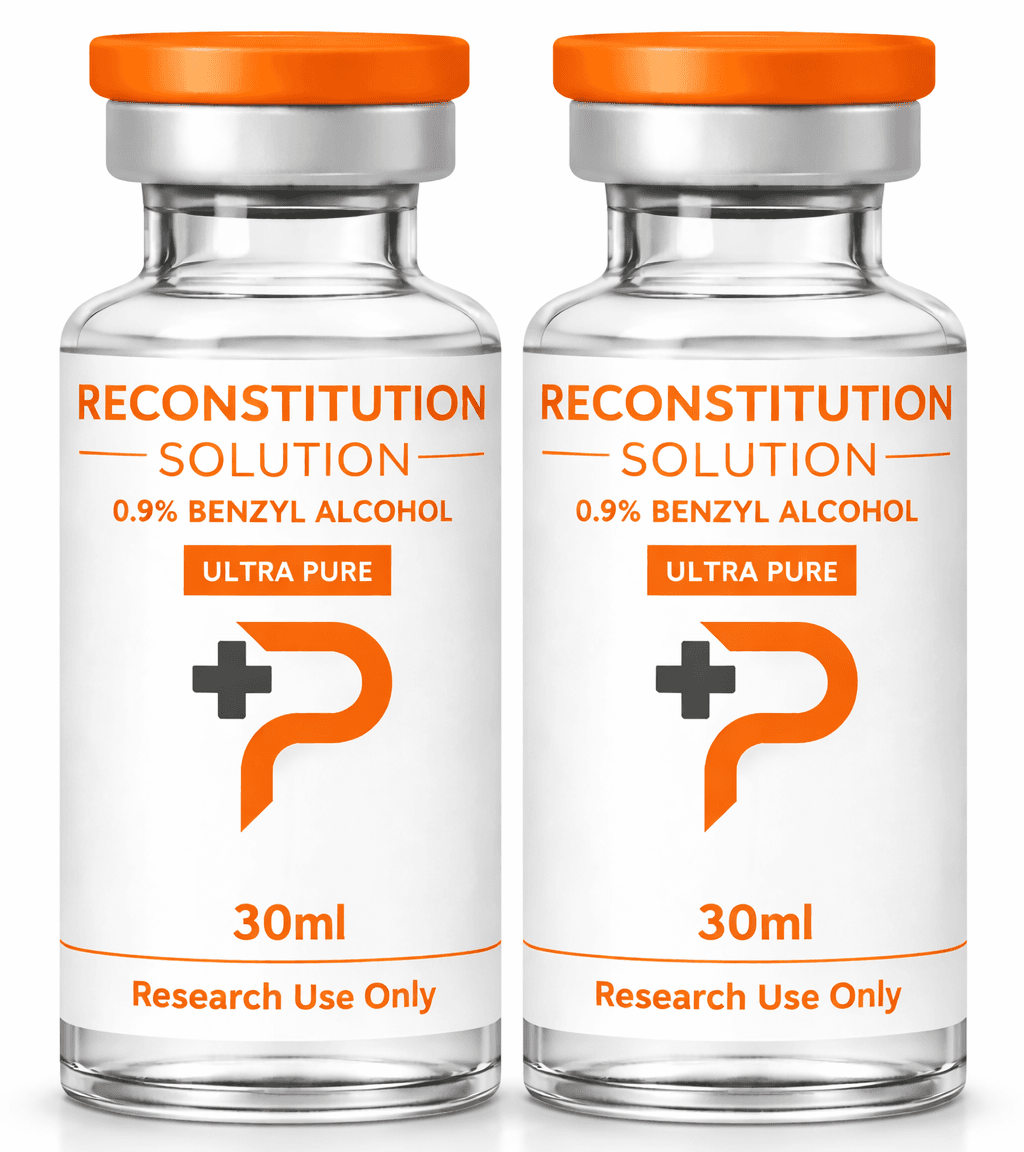
Reconstitution Solution 30 mL – Pack of 2
Manufactured with High-purity formulation. Batch quality controlled for consistent formulation quality. Laboratory Research Use Only.
View Product →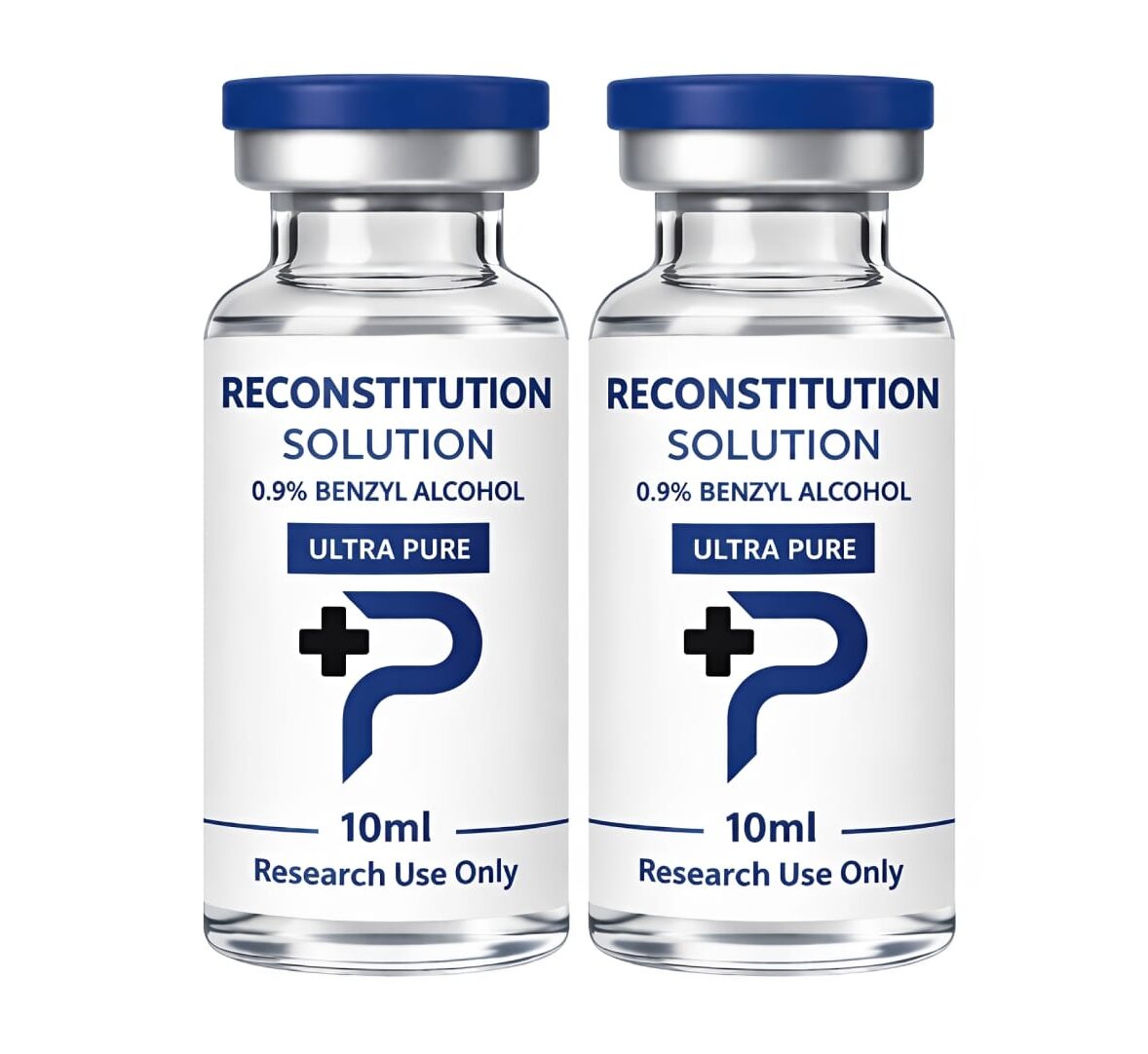
Reconstitution Solution 10 mL – Pack of 2
High-purity formulation manufactured using best-quality ingredients, sized for smaller-volume laboratory research applications. Laboratory Research Use Only.
View Product →
Bundle Deals
Curated bundles built from our Highly-Purified formulations, batch quality controlled for consistent formulation quality across every unit. Laboratory Research Use Only.
Explore Bundles →