
What Is Bacteriostatic Water Used For?
Understanding what bacteriostatic water is actually used for is a key step when you’re trying to understand sterile pharmaceutical products in general. At first glance, it may seem to be just another sterile water, but it has a much narrower purpose than people expect. Bacteriostatic water doesn’t work like a medication on its own, more like it becomes a sterile diluent for specific pharmaceutical products but only if the manufacturer’s prescribing information specifies that this diluent is the right one to use.
Introduction
What makes bacteriostatic water stand apart from other sterile diluents is the fact that it includes 0.9% benzyl alcohol. That preservative thing helps slow or stop bacterial growth after a multi-dose vial has been opened so the product can still fit its intended use when it’s handled under approved aseptic practices. Still, benzyl alcohol doesn’t replace sterile technique, and it doesn’t mean bacteriostatic water is suitable for every medication or every situation, even if it looks tempting. Since different products have different ways they need to be prepared, clinicians and other healthcare professionals rely on the manufacturer’s labeling. That labeling tells them whether bacteriostatic water is appropriate for a given drug. Compatibility matters, stability over time matters, and the intended use for the final prepared product also matters; all of it ties into the decision.
If you’re new to the topic, our guide on What Is Bacteriostatic Water? explains how the formulation works, what makes it different from other sterile diluents, and why it’s commonly supplied in multi-dose vials.
So this guide goes over where bacteriostatic water shows up most often, the kinds of professional environments where it’s encountered, and the considerations manufacturers use when they list it as a sterile diluent. Instead of trying to provide preparation directions, the emphasis is on helping you grasp what the product’s role is in day-to-day pharmaceutical practice and why it belongs only in certain circumstances.
Quick Answer
Bacteriostatic water is mainly used as a sterile diluent for certain medications, but only when the manufacturer’s labeling says it can be used for that purpose. Since it has 0.9% benzyl alcohol, it’s usually packaged in multi-dose vials, and you can see it in places like healthcare facilities, pharmacies, research labs, and pharmaceutical settings where people are doing sterile preparation.
At A Glance
- Used as a sterile diluent for specific medications
- Includes 0.9% benzyl alcohol as a preservative
- Commonly sold in multi-dose vials
- Chosen based on the manufacturer’s prescribing information
- Helps with pharmaceutical preparation more than it provides any therapeutic action
- Found in healthcare, pharmacy, and lab environments
- Still needs proper aseptic handling even though there is a preservative present
- Not always exchangeable with every other sterile diluent
Tables Of Content
- Why is bacteriostatic water used?
- Common uses of bacteriostatic water
Frequently asked questions
- Why Do Manufacturers Specify Bacteriostatic Water?
- When may bacteriostatic water not be right for use?
- Conclusion
Why Is Bacteriostatic Water Used?
Every pharmaceutical product is developed with a purpose in mind, and bacteriostatic water is no exception. Instead of functioning like a typical active medication, it works more like a sterile diluent, like a quiet helper, that supports the making of certain pharmaceutical products when the manufacturer specifies it. What it is meant to do, day to day, depends on compatibility, the labeling that the manufacturer approved, and the preparation needs of the medication itself.
So, while adding 0.9% benzyl alcohol helps the product stay appropriate for multi-dose vials by limiting bacterial growth after the vial is opened, the preservative is only a component in the overall design. Proper aseptic technique still matters a lot, and so do storage conditions and strict follow through with the manufacturer’s directions. Those things are what keep product quality intact, even when bacteriostatic water is part of the workflow. So, in the end, bacteriostatic water is chosen because it has been evaluated for a defined pharmaceutical purpose—not merely because it’s easy to obtain and already on hand.
Bacteriostatic Water Uses
Even if bacteriostatic water looks like a simple thing in terms of formula, it has specific uses. It’s not meant for regular, everyday dilution, nor should it be picked just because it sits there on a shelf, or because it’s “there” and easy to choose simply because it is readily available or convenient. Rather, it shows up only in particular pharmaceutical circumstances, where the manufacturer’s prescribing information identifies it as the proper sterile diluent.
1. Helping with medication reconstitution
A major role of bacteriostatic water is to help reconstitute certain medications. A number of drug products are produced in a concentrated state, or as powders, and they need a sterile diluent before they can be prepared for the use they were designed for. When the manufacturer lists bacteriostatic water as the recommended diluent, then it essentially becomes part of the approved reconstitution procedure for that specific medication. That recommendation is based on tests tied to the product itself, not on convenience, habit, or routine.
Also, it’s worth keeping in mind that compatibility is not universal. Some medications won’t tolerate bacteriostatic water; they instead require another sterile diluent, or they may direct the use of preservative-free solutions. Because of that, healthcare professionals should always check the manufacturer’s prescribing information before choosing any diluent, rather than assume it will work.
Wondering what actually makes up this sterile diluent? Read our guide on What Is in Bacteriostatic Water? Ingredients Explained to learn about its ingredients and how each component supports the formulation.
2. Use in Multi-Dose Vials
One of the most common uses of bacteriostatic water is in multi-dose vial use, those vials that aren’t meant to be used just once. Many sterile solutions are built for a single access only, but bacteriostatic water is usually provided in containers that can be entered more than once. Since people may withdraw from the same vial repeatedly, the formulation typically contains 0.9% benzyl alcohol; this helps slow down bacterial activity in case microorganisms get introduced during those repeated punctures. Even so, benzyl alcohol isn’t something you can treat as a safety measure on its own. It should not replace proper sterile technique.
Every time you take a dose from a multi-dose vial, you still need to follow the approved aseptic method and the specific directions from the manufacturer. Keeping the product quality steady usually comes down to multiple things working together, not just one ingredient. Think sterile manufacturing, suitable storage conditions, careful handling, and also strict adherence to the product labeling.
To understand why bacteriostatic water contains 0.9% benzyl alcohol and how that preservative supports multi-dose use, read our detailed guide on Why Is 0.9% Benzyl Alcohol Added to Bacteriostatic Water?
3. Pharmaceutical Preparation
Bacteriostatic water also shows up during pharmaceutical preparation, especially when sterile products are made up according to the manufacturer-approved process. Healthcare professionals generally look at several considerations before choosing a sterile diluent, including product compatibility and what the manufacturer actually recommends.
They also consider the preparation requirements, the storage guidance, and any product-specific precautions that might apply. Instead of assuming all sterile diluents act the same way, professionals lean on validated information for each product so the medication is prepared exactly how the manufacturer specifies it. That deliberate approach helps support product quality and steadier consistency while the preparation is happening, from start to finish.
4. Pharmacy Practice
Hospital and community pharmacies may end up using bacteriostatic water when it is identified as the proper sterile diluent for certain pharmaceutical products. In practice, pharmacists review the manufacturer’s documents before they prepare anything. They make sure the diluent that is recommended actually matches what’s on the approved labeling. They also look at storage directions, product compatibility, and the institutional steps that help keep sterile pharmaceutical practices safe.
5. Healthcare and Clinical Settings
Healthcare facilities often manage a range of sterile pharmaceutical products. For that reason, it matters a lot to use the correct diluent for each medication; otherwise, the whole process can drift off. When bacteriostatic water is specified, healthcare professionals use established protocols that are designed to preserve product quality during preparation.
In most cases this involves checking the manufacturer’s labeling, applying suitable aseptic techniques, and sticking to the facility’s policies for sterile handling. The diluent decision is guided by evidence-based guidance, not personal preference, so that the preparation stays consistent across different healthcare environments.
6. Research and Laboratory Applications Beyond clinical settings
Bacteriostatic water can also be used in research laboratories and other scientific settings, where sterile preparation is routine work rather than a rare exception. Researchers and laboratory personnel follow documented procedures to keep things consistent, and to protect product quality during those preparation activities. Even though laboratory applications can shift a bit depending on the type of work that is happening, the same core ideas around sterile handling, the manufacturer guidance they provide, and quality assurance still matter.
When you examine what bacteriostatic water does in laboratory settings, it demonstrates a wider importance in pharmaceutical and scientific workflows. At the same time, it reinforces that using it should remain dependent on the approved product recommendations, not on guesswork.
Why Do Manufacturers Specify Bacteriostatic Water?
A common question is why some pharmaceutical products specify bacteriostatic water, but others recommend using a different sterile diluent. Honestly, the real answer is in how the product is developed and tested. Before a medication ever lands in healthcare facilities, manufacturers look at a bunch of things like compatibility, formulation, and stability, and these evaluations are reflected in the product’s prescribing information and the approved labeling. So it’s not really about picking something “easier”; healthcare professionals would rather follow the manufacturer’s directions so the medication is mixed and prepared in a way that matches validated pharmaceutical standards. Here are several key factors that influence this decision, even if it seems small on the label.
Product Compatibility
Compatibility is one of the most important elements when choosing a sterile diluent. Every medication has its own formulation and preparation needs. During development, manufacturers evaluate how the drug behaves with specific diluents before they put those instructions into the prescribing information. So for that reason, bacteriostatic water should not be treated like it can be swapped with any other sterile diluent. If the medication calls for an alternative, then that instruction should be followed, that recommendation should be followed.
Product Stability
Another big thing to think about is product stability, and really it matters more than people assume. Manufacturers typically run stability studies to see whether a medication can keep its intended quality when it’s prepared and stored under the recommended conditions. With those studies, they can also judge, basically, whether bacteriostatic water is a suitable diluent for that specific product. Since stability needs vary a lot from one medication to the next, two products that look similar can end up with entirely different preparation instructions. That is why healthcare professionals end up following the manufacturer’s guidance, instead of just assuming that one sterile diluent can be swapped for another. Sometimes it works… but it often does not.
Intended pharmaceutical use
What the product is meant to do also affects which diluent gets picked. Some medications are made for single-use preparation, while others are meant for contexts where multi-dose handling is reasonable. During product development, manufacturers review these intended scenarios, and then they include the matching preparation guidance in the approved labeling. When the right diluent is chosen, it can help keep product quality steadier during the whole preparation process, and it also keeps things aligned with the manufacturer’s validated instructions.
Compliance with quality standards
Pharmaceutical manufacturers build sterile products inside established quality and regulatory frameworks. Groups such as the U.S. Food and Drug Administration (FDA) and the United States Pharmacopeia (USP) publish guidance, and these standards help support the quality of sterile pharmaceutical products. The manufacturer’s labeling is where these decisions show up. It acts as the main point of reference for healthcare professionals when deciding if bacteriostatic water is appropriate for a particular medication.
When may bacteriostatic water not be right for use?
Bacteriostatic water has a helpful role in pharmaceutical preparation, but it is not appropriate for every medication or every moment. In other words, its use should be guided by the manufacturer’s prescribing information, not by everyday habits or personal “it should be fine” ideas.
Below are a few scenarios where another sterile diluent can be a more suitable choice.
When the label specify another diluent
Some products are set up, from the start, to be mixed with a different sterile diluent. Usually, the manufacturer’s labeling makes that clear, and it tells you which solution should be used during preparation. If the recommended diluent is substituted with bacteriostatic water without explicit manufacturer approval, it may change compatibility or, in the worst cases, product quality. Sticking with the approved labeling also keeps the preparation in line with the validated instructions, so everything stays consistent.
When a preservative-free solution is required
Bacteriostatic water contains 0.9% benzyl alcohol, so it is not appropriate when the manufacturer’s instructions specify a preservative-free sterile diluent. Many medications are developed and then tested using sterile water for injection. In those cases, clinicians follow the product labeling, and they avoid swapping to a different diluent just because it seems similar.
When compatibility has not been confirmed
Even if two medications appear similar, they may still have different preparation expectations, and that matters. So if the manufacturer’s prescribing information does not name bacteriostatic water as a compatible diluent, healthcare professionals shouldn’t treat it as a stand-in. Compatibility needs to be verified through the approved product documentation.
When Proper Aseptic Technique Cannot Be Maintained
Having 0.9% benzyl alcohol in the mix does not replace proper sterile handling procedures. Maintaining the product quality stable depends on maintaining the established aseptic practices, using sterile equipment, storing items according to the manufacturer’s directions, and handling multi-dose vials appropriately during their intended period of use.
Conclusion
Understanding what bacteriostatic water is used for starts with recognizing its specialized role in pharmaceutical preparation. It does not work like a medicine, more like a sterile diluent that certain products rely on, especially when the manufacturer’s prescribing information says this is the right choice.
Its formulation includes 0.9% benzyl alcohol, which is there for a reason; it supports the idea of multi-dose vials. In other words, after the container is opened, it helps to inhibit bacterial growth. Still, the preservative part doesn’t excuse anything—it does not replace proper aseptic technique, the manufacturer’s instructions, or established pharmaceutical handling procedures.
What People Ask?
1. What is bacteriostatic water mostly used for?
Bacteriostatic water is mainly used as a sterile diluent for specific medications, but only when the manufacturer’s prescribing information says it’s the right option. So it kind of supports compounding and mixing rather than giving any direct, therapeutic effect. It’s often provided in multi dose vials because it contains 0.9% benzyl alcohol , this helps slow down bacterial growth after the vial has been opened.
2. Why do some medications use bacteriostatic water while others dont?
Because the formulations are not the same, and compatibility matters a lot. Each medication has its own stability characteristics, excipient choices, and how it behaves once mixed. During product development, manufacturers test these variables and then they choose the sterile diluent that fits the drug best, then they spell it out on the labeling. That’s why bacteriostatic water is only recommended for products where it’s been proven compatible.
3. Is bacteriostatic water used only in hospitals?
No. Hospitals are where people most often run into it , but bacteriostatic water can also be used in community pharmacies, outpatient clinics, research labs, and even pharmaceutical manufacturing settings. In other words the decision depends on the manufacturer’s recommendations, rather than the environment where it’s being prepared.
4. Can bacteriostatic water swap in for other sterile diluents?
Not automatically, and usually not without checking. Sterile diluents aren’t always interchangeable, even if they seem similar. Some drugs are made to work with bacteriostatic water, while others are meant for preservative free sterile water or a different approved diluent. Health-care professionals should always check the manufacturer’s prescribing information before choosing what to use.
5.Does bacteriostatic water reduce the need for aseptic technique?
No, even if 0.9% benzyl alcohol can help slow down bacterial growth a bit, it can not , in any way, stand in for proper aseptic technique. Product quality keeps depending on sterile handling, careful storage and then doing exactly what the manufacturer says the whole time during preparation.
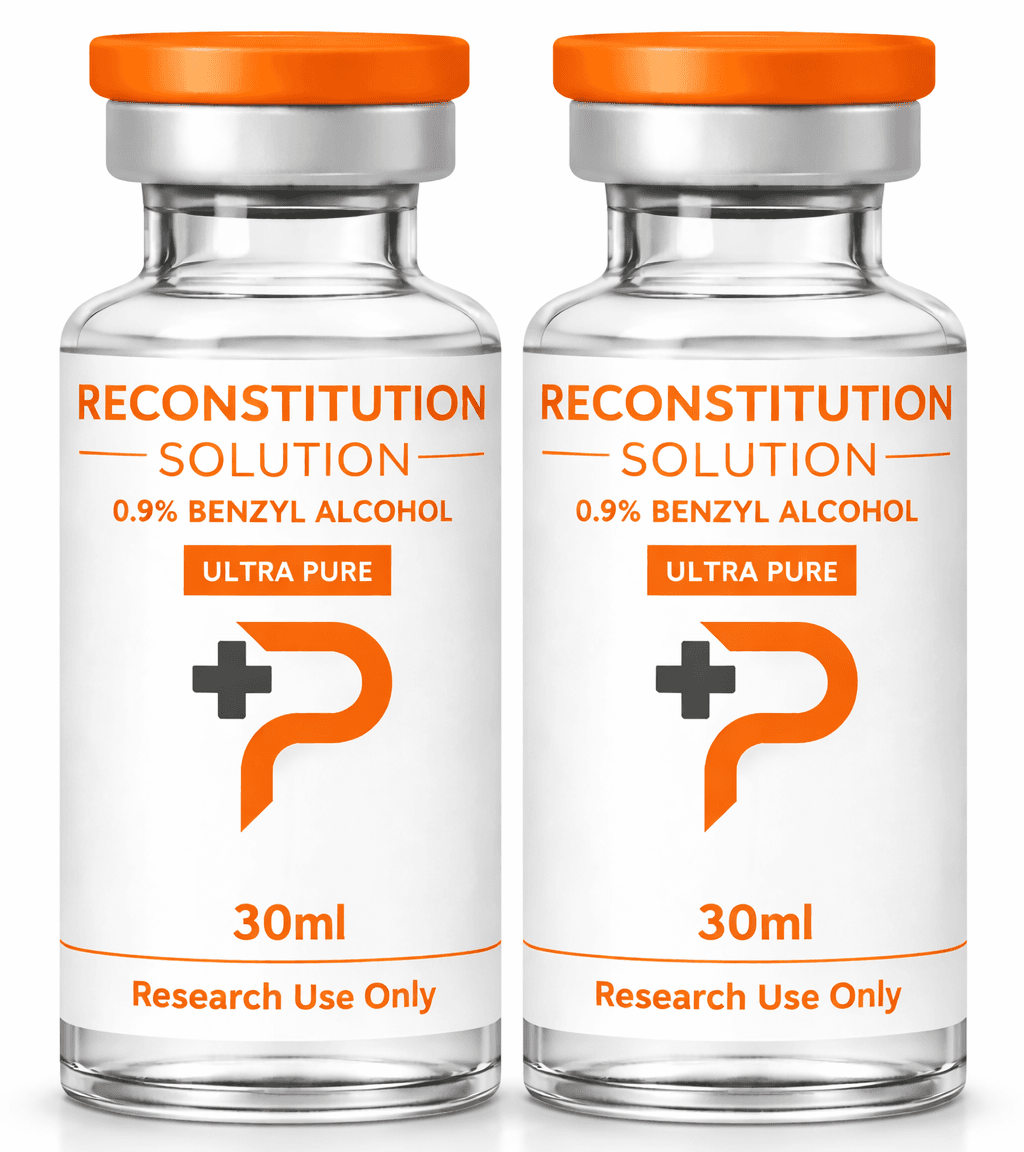
Reconstitution Solution 30 mL – Pack of 2
Manufactured with High-purity formulation. Batch quality controlled for consistent formulation quality. Laboratory Research Use Only.
View Product →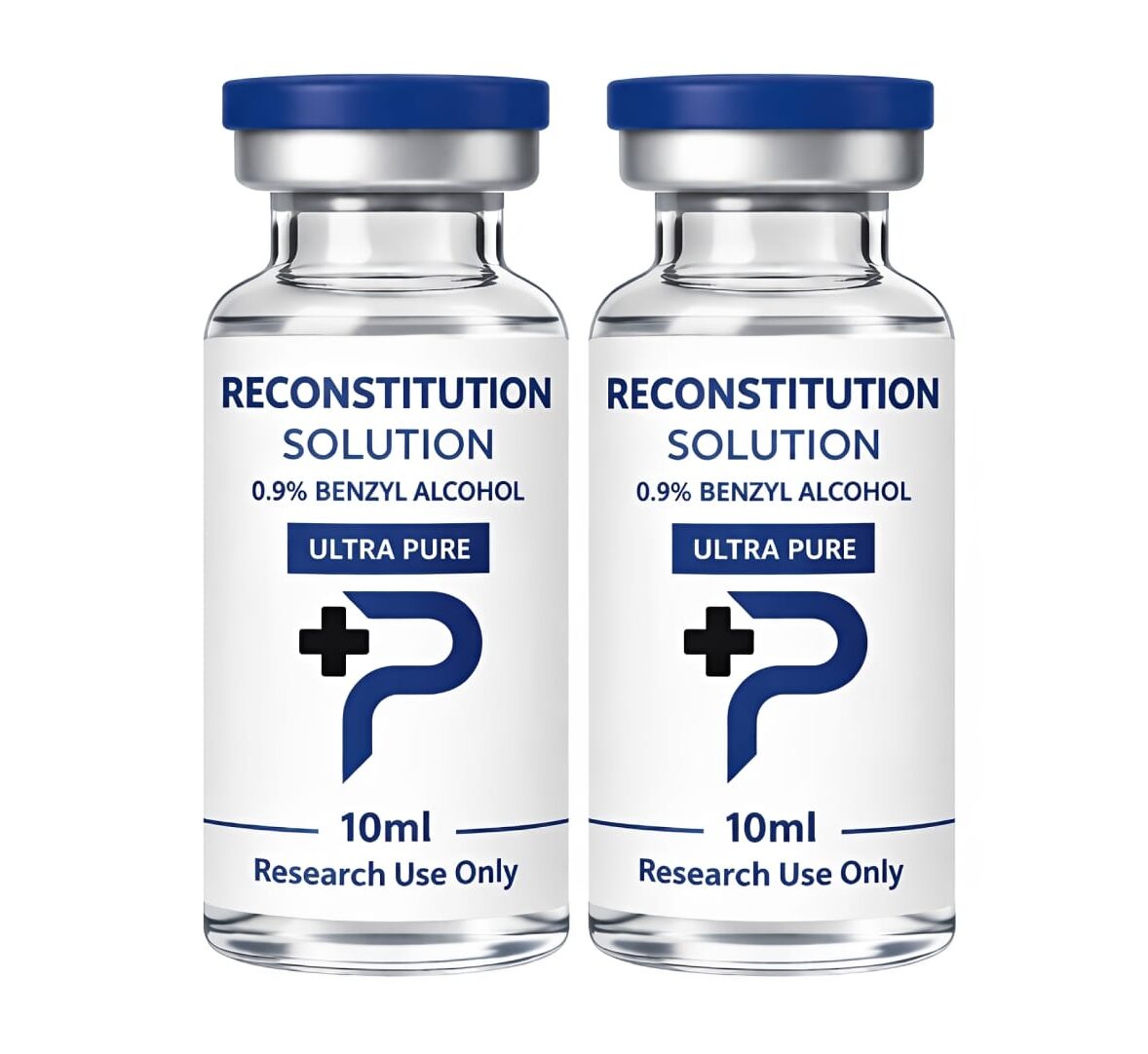
Reconstitution Solution 10 mL – Pack of 2
High-purity formulation manufactured using best-quality ingredients, sized for smaller-volume laboratory research applications. Laboratory Research Use Only.
View Product →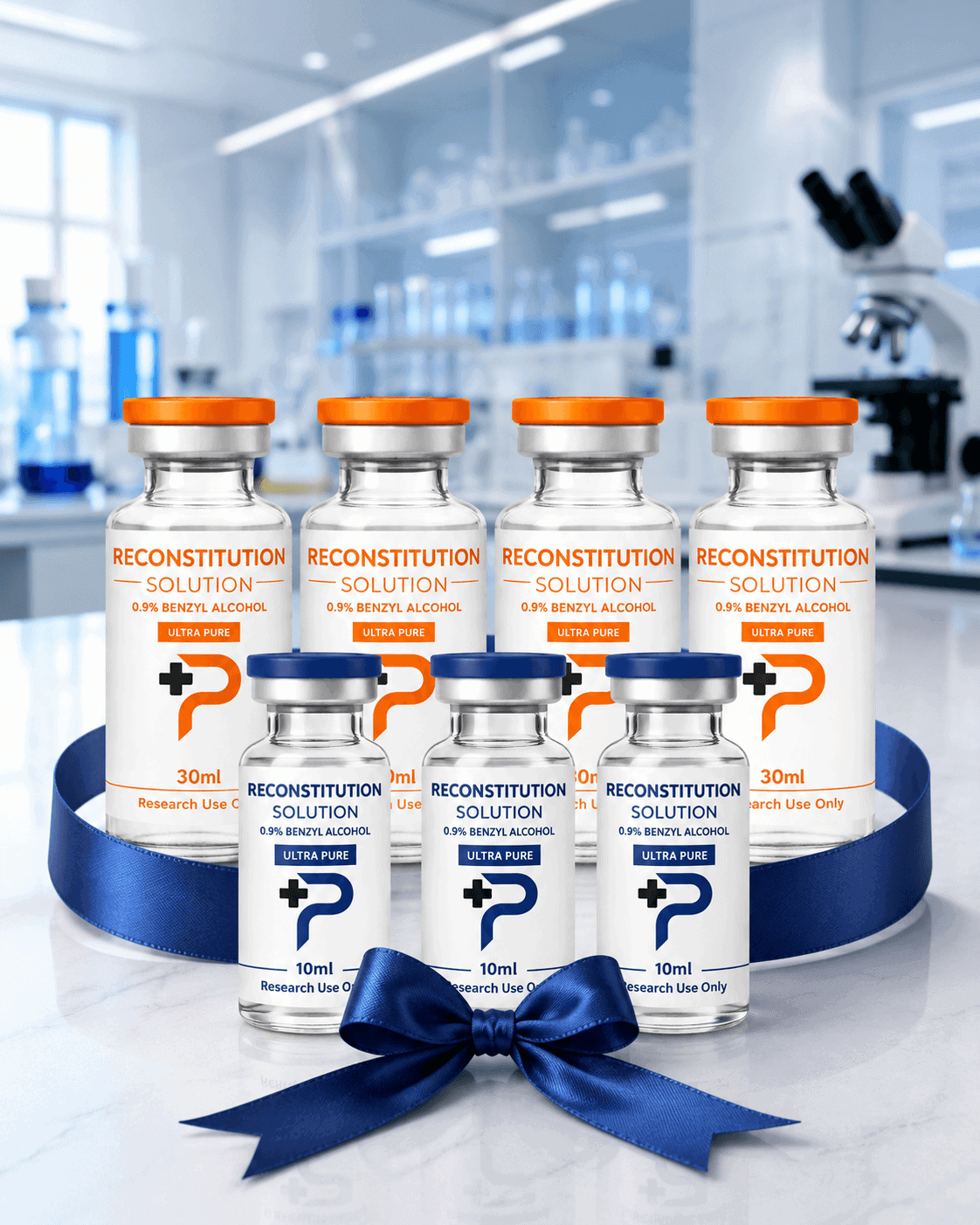
Bundle Deals
Curated bundles built from our Highly-Purified formulations, batch quality controlled for consistent formulation quality across every unit. Laboratory Research Use Only.
Explore Bundles →