
How Long Does Bacteriostatic Water Last? Storage & Shelf Life
One of the more common questions people ask is, how long does bacteriostatic water last? But the answer depends on whether the vial has been opened, how it was handled, and what instructions came with the product. So there is only one scenario that fits every situation; the usable time is more tied to storage conditions, the product integrity, and the directions for that specific bottle, not just some vague general idea.
Introduction
It’s also important to keep shelf life separate from usable life after opening. A sealed vial might remain suitable until the labeled expiration date, as long as it was stored correctly. But once it’s opened, the different guidance applies, and you follow the approved labeling. These are different concepts and shouldn’t be mixed.
This guide explains what influences a vial’s usable lifespan, how expiration periods are established, and why proper handling helps preserve solution consistency. We also cover topics like storage methods, refrigeration, and shelf-life dates in separate guides.
If you’re new to the topic, learn What Bacteriostatic Water Is? in our complete beginner’s guide.
Quick Answer
How long bacteriostatic water lasts depends on whether the vial is unopened or has already been used. Generally, an unopened product is expected to remain suitable until its labeled expiration date, assuming it was stored according to the prescribing directions. After opening, the usable window depends on approved product information, the handling steps, and any relevant pharmaceutical guidance.
To better understand the role of a sterile diluent, see our guide on What Is Bacteriostatic Water Used For?
Key Takeaways
- The shelf life and the usable life after opening are different concepts.
- Always follow the approved labeling.
- If you handle the product properly, you help preserve the quality.
- Once you open a vial, it requires different evaluation, and it is not the same math as before.
- Printed expiration and beyond-use instructions are sometimes not aligned.
- Before each use, you should check the product’s integrity.
What Determines How Long Bacteriostatic Water Lasts?
There isn’t a single answer because several factors influence a vial’s usable lifespan. Some of those things come from the solution, but other parts depend on how the vial gets stored and handled after purchase.
Whether the vial has been opened
One of the biggest factors is simply this: has the vial stayed sealed, or has it already been opened and used?
An unopened vial is meant to remain suitable until the labeled expiration date, as long as it’s stored the way the manufacturer says. Once the container is opened, additional handling considerations apply. Each time the vial is accessed, there is a chance of environmental contamination, so careful use becomes increasingly important.
Even though bacteriostatic water for injection contains a preservative, it shouldn’t be considered a means of extending the recommended period of use. The right “after opening” period should always come from the approved labeling and relevant pharmaceutical guidance.
Learn more about what else makes up the formulation in What Is in Bacteriostatic Water? Ingredients Explained.
Manufacturer labeling
Every pharmaceutical product includes approved product information, and that label has the important details about storage, expiration dating, and the intended pharmaceutical use.
Instead of leaning on general comments you might find online. This is because it reflects the testing and the approved conditions under which it’s supposed to be used.
Key details usually include :
- Shelf life date
- Storage recommendations
- Container type
- Intended pharmaceutical use
- Product identification
Following this information helps ensure the product is used within its validated conditions of use.
Storage Conditions
Environmental conditions can influence product stability during its entire labeled lifespan.
Stability studies evaluate the formulation under defined storage conditions. Keeping the vial within the specified range helps maintain its quality up to the stated expiration date.
Key storage thoughts include :
- Recommended temperature
- Protection from excessive heat
- Avoiding freezing, unless freezing is clearly specified
- Keeping the container properly sealed
Handling Practices
Healthcare professionals follow aseptic procedures whenever they access multi-dose containers. That means using sterile equipment, disinfecting the vial stopper before each entry, and reducing unnecessary handling to preserve the product throughout the intended period of use. Proper handling does not extend the approved labeling period of use.
If you’re wondering why multi-dose containers are used, get more information about multi-dose and preservative-free sterile water.
Product Integrity
Before each use, visually inspect the product. If the solution or container appears unusual, even if the expiry date has not passed.
Common signs include :
- Cloudiness
- Visible particles
- Damage to the container
- Leakage
- Missing or damaged closure
If any changes are observed, you should review and follow the instructions for next steps.
Why these factors matter together
You can’t just point at one thing and say that is what decides how long a solution stays usable. Shelf life is more like a layered result; it’s about a combination of several elements, for example:
- Manufacturer-approved expiration dating
- If the vial has been opened at any time
- The storage conditions that are recommended, not the ones you guess
- Proper handling practices, including how it’s moved or prepared
- The overall state of the container and the solution inside
When you look at all of this at once, you usually get a clearer, more realistic view of longevity than if you trust a single date or only follow one storage tip.
The manufacturer’s labeling also determines when bacteriostatic water is appropriate for peptide preparation, which is discussed in our complete guide.
Shelf Life Before Opening
Before a vial is opened, its lifespan is determined by the labeled expiration date. That date isn’t just picked out of thin air; it comes from stability studies. Basically, they look at how well the solution holds up while it’s kept in the recommended storage setting for long enough. So it shouldn’t be taken as a rough “maybe” or a casual general guideline; it is the time window that supports the condition throughout the labeled shelf life.
An unopened vial remains sealed during packaging, manufacturing, transport, and storage. If the container remains intact and you keep it per the product information, it is generally expected to remain suitable until the printed date.
How Manufacturers Put Together Shelf Life
That labeled shelf life is not something chosen randomly. Before a medical product even reaches the market, manufacturers run stability testing to see how the formulation behaves over time.
These studies evaluate whether the product continues to meet its approved quality requirements throughout the proposed shelf life. This testing is done under controlled conditions that mimic the storage environment.
Common stability checks can include:
- Physical appearance
- Chemical stability
- Sterility
- Container integrity
- General product quality
Even without opening it, a vial should still be inspected, just in case. Before you ever break the seal, it’s a good habit to look at it. The printed date doesn’t prove that the substance stays appropriate.
Ahead of use, take a moment to check for :
- Cracks or other damage on the vial
- Protective seals that are missing or seem loose
- Any leakage around the stopper or seams
- Discoloration in the solution
- Visible particles floating or suspended in the liquid.
If the product appears damaged, altered, or simply unusual, then it should be assessed using the product information, not just the printed date on the label.
What Changes After the Vial Is Opened?
Opening a vial marks the start of a different phase in its lifecycle. An unopened vial remains protected by its original seal until first access. But once someone accesses it, there are extra handling considerations. For that reason, the usable window after first use is not judged the same way as the product’s unopened shelf life.
Opening a vial marks the start of a different phase in its lifecycle. An unopened vial remains protected by its original seal until first access. But once someone accesses it, there are extra handling considerations. For that reason, the usable window after first use is not judged the same way as the product’s unopened shelf life.
Why opening truly changes things
Once the vial is opened, its condition is judged differently. After that original seal has been broken, the product isn’t assessed by the printed expiration date; instead, it’s evaluated with a handful of other things.
When someone reviews an opened vial, healthcare professionals usually check things like:
- When it was first accessed.
- If it’s been handled in line with the approved product instructions.
- What the solution appears to be, for example, is clarity or any odd changes.
- The status of the container along with the closure.
All of those points are weighed together to decide whether the product is still usable for its intended purpose.
Beyond the Printed Expiration Date
A common misunderstanding is that the expiration date alone decides whether an opened vial can still be used.
What actually happens is different. In general, the expiry date applies to the unopened product when it is stored under the recommended conditions. After the first time access happens, healthcare facilities often follow the manufacturer’s guidance and any relevant institutional policies about how long the product can be used.
So for that reason, checking an opened vial is more than just looking at the label.
Why Proper Handling Remains Important
Once a vial becomes part of routine use, consistent handling helps preserve the conditions it was intended to have during use.
Healthcare professionals usually do things like:
- Cleaning the vial stopper before each access.
- Using new sterile equipment for every withdrawal.
- Keeping extra, unnecessary handling to a minimum.
- Putting the vial back into its recommended storage environment after use.
These steps help maintain appropriate conditions, but they do not automatically extend the manufacturer’s recommended period of use.
Inspect the Product Before Each Use
Even if the vial is still within its intended period of use, it should be inspected before every withdrawal.
Don’t depend on dates only. A visual inspection can catch changes that might mean the product should no longer be used.
Watch for things such as:
- Loss of clarity
- Floating particles
- Changes in color
- Cracked or leaking containers
- Damaged seals or closures
Opened Versus Unopened Vials Are Not Evaluated the Same
The main idea is that unopened products are judged mostly by what the label specifies about shelf life and whether the container looks intact, properly sealed, etc. Once the vial is opened, though, the evaluation needs extra thought about the handling history and how it looks: clarity, contamination signs, or any other condition changes.
Understanding this gap is useful because it avoids the mix-up between expiration and usable life after opening. These terms sound similar, sure, but they’re different functions in practice.
Factors That May Shorten the Product's Usable Life
Even if manufacturers list a shelf life under controlled circumstances, several factors may affect its condition before the labeled shelf life ends. A few other things can shift whether it stays in an acceptable state through the whole intended time. None of these details automatically mean the vial is unsuitable for use, but they may suggest that the condition should be checked with a bit more care.
Improper Storage
How the item is stored matters a lot for quality. If it’s exposed to conditions, the vial may change before you even reach the labeled expiration date.
Common situations include:
- Excessive heat
- Freezing temperatures, unless it’s specifically permitted.
- Direct sunlight
- High humidity
- Repeated temperature swings
Sticking to the storage conditions helps preserve the same environment where the solution’s condition was originally tested.
Repeated Handling
A multi-dose vial is meant for repeated access, but if there is too much handling or more frequent checks than needed, the risk of contamination or even physical damage can go up a bit, without anyone noticing at first.
During the intended span of use, keeping the way it is handled consistent matters because it helps preserve the product’s condition. Stick to the manufacturer’s guidance and reduce unnecessary touchpoints.
Examples of good practice are:
- Using sterile tools for every withdrawal
- Wiping or cleaning the vial stopper before each access
- Avoiding unnecessary manipulation
- Putting the vial back into appropriate storage after use
These steps help maintain quality, but they do not extend the approved period of use.
Damage to the Container
The container condition is just as important as what’s in the solution inside it, even when everything else looks fine. If the vial starts to crack, leaks, or the closure is damaged, its overall integrity can be affected. In these kinds of situations, don’t just judge the product by the labeled expiration date and move on.
Before using, take a moment and inspect the vial for:
- Cracks or chips
- Loose or damaged caps
- Broken seals
- Signs of leakage
- Other visible damage
If you have any concerns at all, those should be checked and sorted out based on the labeling, not by guesswork.
Changes in Appearance
A visual inspection remains an important part of assessing the product.
If the solution is no longer clear, it can mean more evaluation is needed, even if the vial is still within its labeled window for use. Look for changes like:
- Cloudiness
- Visible particles
- Odd discoloration
- Sediment
Any unexpected shift in appearance
People who want a more detailed inspection guide can refer to Signs Your Bacteriostatic Water Should Not Be Used.
Why Multiple Factors Should Be Considered
There isn’t one single factor that decides whether the vial is still acceptable for use. Instead, healthcare professionals tend to consider the product as a whole.
Factor |
Why It Matters |
|---|---|
Expiration Date
|
Shows the manufacturer-supported shelf life, assuming recommended storage conditions
|
Opening Status
|
Helps determine whether extra handling considerations apply
|
Storage History
|
Gives clues about whether it was kept under appropriate conditions
|
Physical Condition
|
Confirms the container and the solution seem intact
|
Manufacturer Guidance
|
Lays out the approved directions for storage and use
|
Conclusion
Learning how long bacteriostatic water lasts is not only about checking an expiration date. The period it remains usable depends on whether the vial was opened, how it has been handled, its physical condition, and what the product’s approved in their instructions.
Related topics like storage, expiration dates, stability testing, and product inspection each have their own points to watch. Looking into those separately can give a better grasp without stepping on their individual intent.
What People Ask?
1. How long will bacteriostatic water stay usable after opening it?
There isn’t one exact answer that fits every single product. The real usable period after opening usually depends on the developer’s approved labeling, how the vial was handled, and whether the vial still looks and performs the same. In real life, healthcare professionals rely on the product information.
2. If the vial is unopened, does it stay okay until the expiration date?
Yes. An unopened vial is generally intended to remain suitable until the labeled expiry date, assuming it was stored the way the manufacturer directs, and the container doesn’t have any issues. Before use, the vial should also get a quick check for obvious concerns, like visible damage or a noticeable change in how it looks.
3. Is the expiration date the same as the usable time after opening?
No. These are separate concepts. The expiration date is about the unopened product when it is kept under the recommended storage conditions. Once the vial is opened, healthcare professionals check the directions and the handling history.
4. Does storing bacteriostatic water correctly make it last longer?
Proper storage supports quality, but it will not magically extend the expiration date or replace the manufacturer’s recommended window after opening. Those storage instructions exist to keep the product in the conditions it was evaluated under during stability testing.
5. What should be checked before using a vial?
Before each use, check both the solution and its container. The liquid should remain clear, and the vial should be without cracks, leaks, damaged seals, or even visible particles. If something unusual, like cloudy residue or a compromised closure, happens, then you should pause and follow the developer’s guidance before using the product.
6. What factors influence how long a vial remains suitable?
A few things matter, and they tend to interact. For example, whether the vial has been opened, whether it was stored under the conditions, how it was handled, and the state of the container itself. When you consider all of that together, it’s more meaningful than just focusing on one single element.
7. What factors are considered when selecting water for reconstitution?
- The medication’s instructions and compatibility decide which water to use.
- Manufacturers specify whether a preservative-free or multi-use diluent is required.
8. How often do you update the Certificate of Analysis (COA) for your products?
- We update the COA with every new batch produced or received.
- This ensures customers always receive the most current and accurate quality data.
9. How should the reconstitution solution be stored?
Keep it at a stable room temperature, away from heat and direct light.Make sure the vial stays tightly sealed when not in use and discard it after its recommended usage period.
10. Do you accept credit cards?
Yes, we accept major credit cards for convenient and secure payments.
All transactions are processed through trusted and encrypted payment systems.
11. What makes this reconstitution solution different?
It contains 0.9% benzyl alcohol, offering preservative and stabilizing properties that help maintain solution integrity over multiple uses.
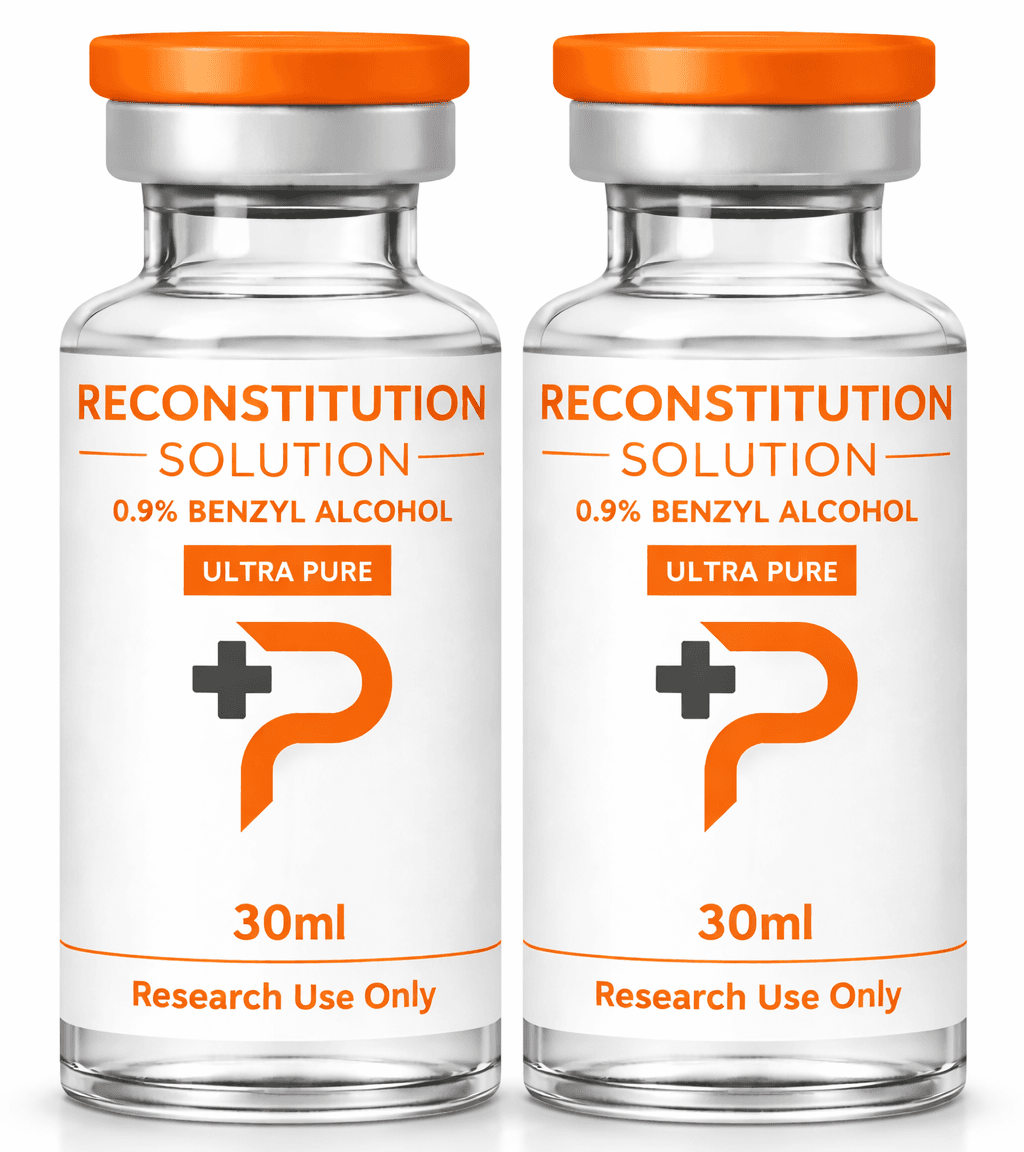
Reconstitution Solution 30 mL – Pack of 2
Manufactured with High-purity formulation. Batch quality controlled for consistent formulation quality. Laboratory Research Use Only.
View Product →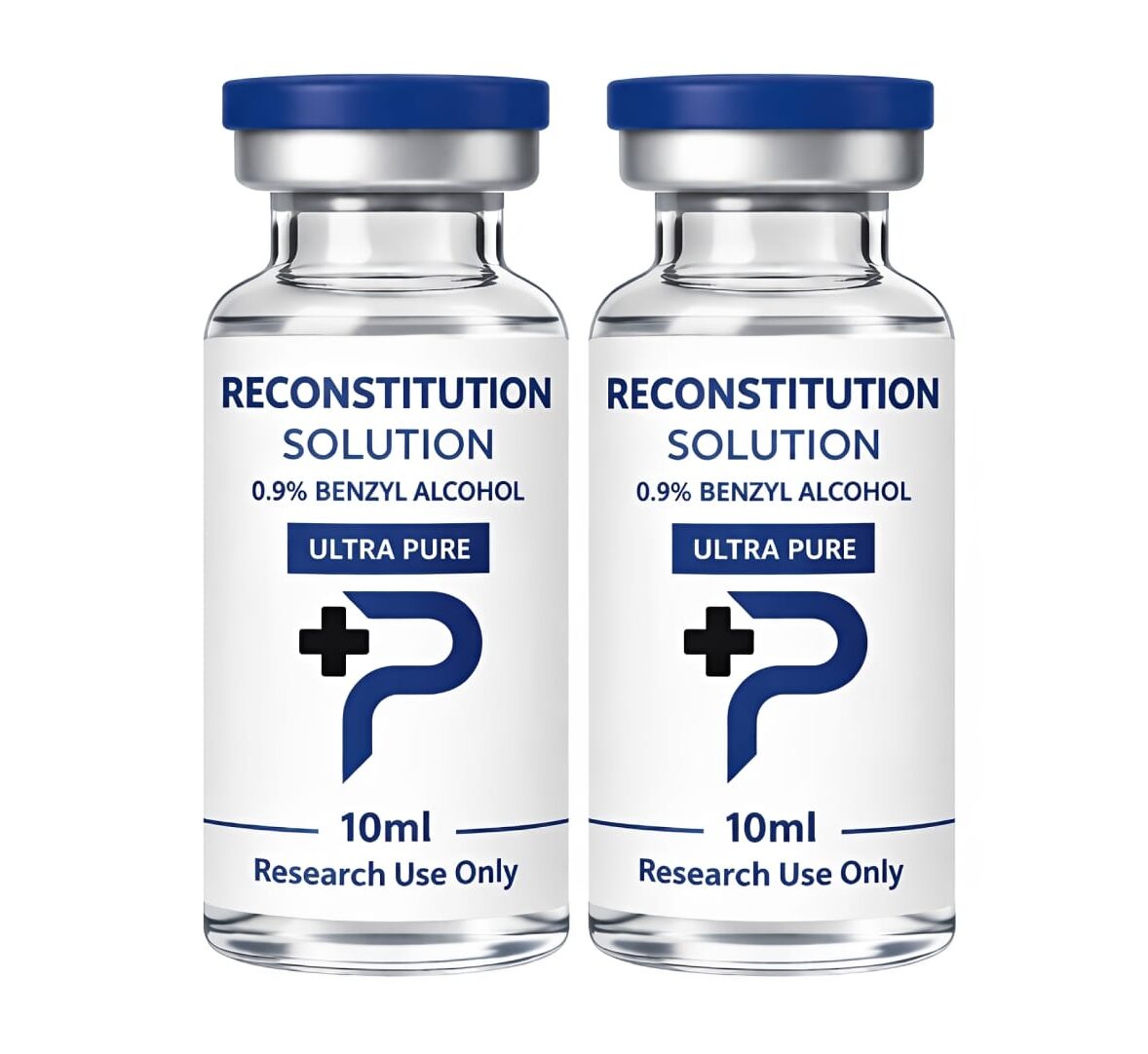
Reconstitution Solution 10 mL – Pack of 2
High-purity formulation manufactured using best-quality ingredients, sized for smaller-volume laboratory research applications. Laboratory Research Use Only.
View Product →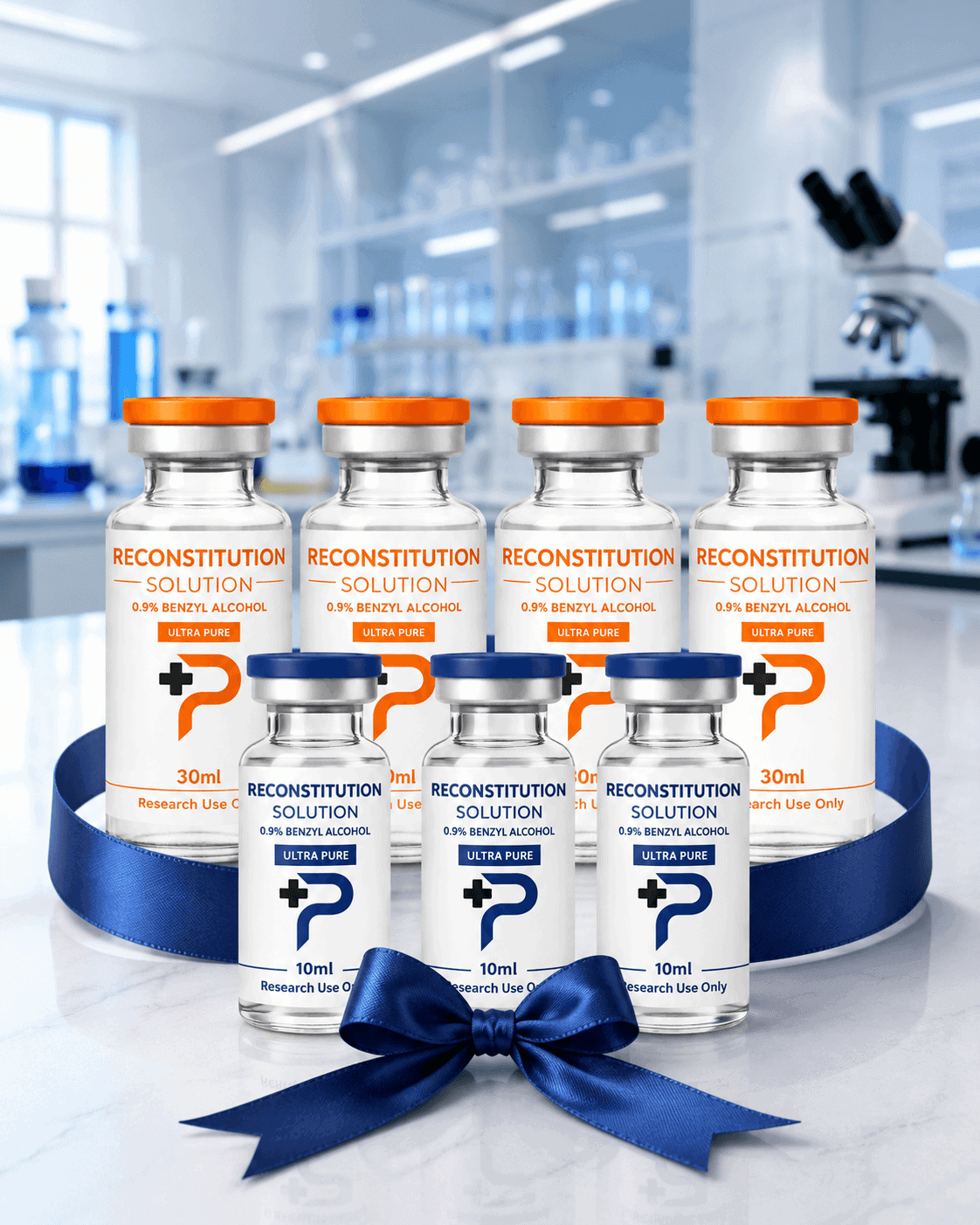
Bundle Deals
Curated bundles built from our Highly-Purified formulations, batch quality controlled for consistent formulation quality across every unit. Laboratory Research Use Only.
Explore Bundles →